Categories
industry updates

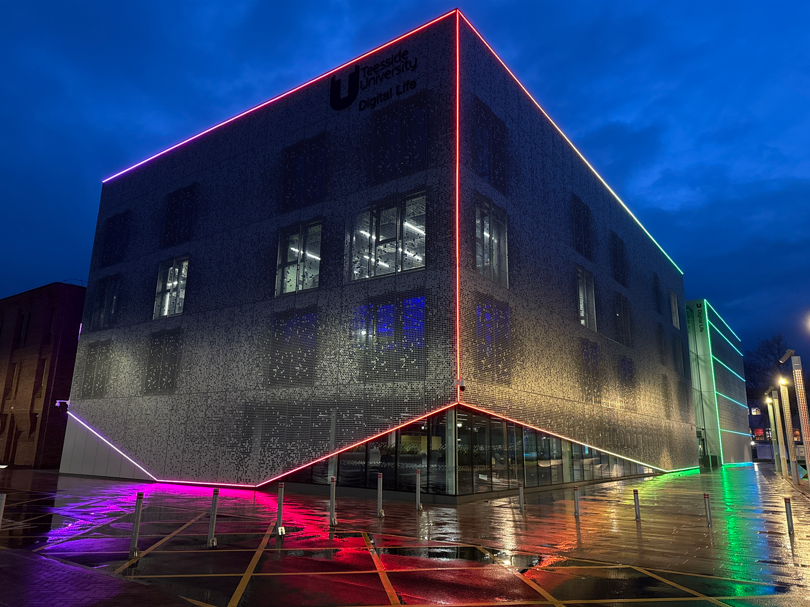
Elite Control Services (ECS) provide dynamic lighting controls to Teeside University

Elite Control Services (ECS) were appointed by Park Lighting Design to provide specialist lighting controls commissioning for a new installation for Teeside University. Working closely with Park Lighting Design as the designers and supplier, contractors SES and Traxon e:cue as the chosen solutions provider, the team selected a full dynamic lighting solution from Traxon e:cue using Pixel Ribbon GO RGBW HB and e:cue controls to deliver flexible, high-impact RGBW lighting effects across the scheme. ECS were brought in to ensure that the control system was correctly configured, resilient and straightforward for the on-site team to operate and adapt as required.

The ECS scope covered testing and verifying all control addresses so that every Pixel Ribbon run responded accurately within the system, followed by detailed mapping to align the controls with the design layout and intended lighting scenes. The team then set up a clever master–slave control arrangement, configuring the e:cue controllers so that the system would continue to operate seamlessly in the event of a fault. If the slave controller detects that the master is no longer present or communicating on the network, it automatically takes over system control, limiting any potential outages and helping to maintain continuous lighting performance for students, staff and visitors.

Once the core commissioning was complete, ECS provided on-site training for the university’s team, demonstrating how they can programme and adjust the system themselves to support different events, timings and visual requirements. This ensured that Teesside University not only benefited from a robust and intelligently configured Traxon e:cue solution but also had the in-house capability to make the most of its new dynamic lighting.

Commenting on the project, ECS Director Adam Hardy said: “We were asked to come in alongside Park Lighting Design and Traxon e:cue to make sure the controls were set up properly and would keep the lighting running smoothly. We handled everything from testing addresses and mapping through to configuring the master and slave controllers and delivering training so the university team can programme the system themselves. By building in that resilience, we are proud to have helped Teesside University get a reliable, flexible lighting solution with minimal risk of downtime.”

Project credits:
Client: Teesside University
Contractor: SES

Lighting Designer and Supplier: Park Lighting Design
Solutions provider: Traxon e:cue
Photography: Courtesy of Park Lighting Design

Categories
industry updates

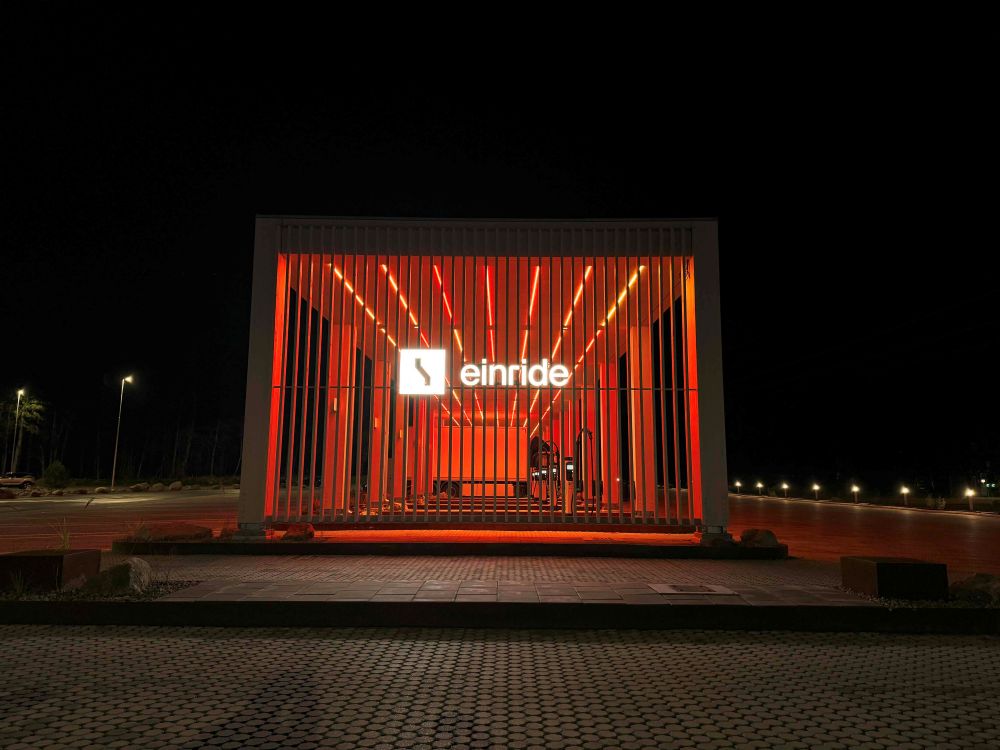
Einride EV charging stations attract attention with dynamic lighting

A brand-new concept in EV charging stations for heavy vehicles is grabbing attention through its dynamic lighting, made possible with technology from Pharos Architectural Controls.

The innovative approach to charging stations has been developed by Einride; a technology company focused on sustainable logistic solutions. The network of stations has been purposefully designed with a strong investment in energetic lighting design. The aim is to make the stations easily identifiable and locatable even in the darker hours. Adding to this, the lighting makes the experience of charging heavy vehicles more enjoyable and engaging.

The new lighting design is being rolled out across Einride’s network of charging sites, starting with the station in Varberg, Sweden. The project’s lighting designer, Julia Ekman of Invitedlight, specified a solution from Pharos to deliver the dynamic lighting requirements for the Varberg charging station. A Pharos Designer LPC 1 controller is at the heart of the advanced lighting design at the Varberg site, and is also being utilised across the full-network of Einride’s charging facilities.

The Designer LPC is an all-in-one control solution that is ideal for LED lighting installations. As a rugged, compact unit, the LPC is designed to offer complete reliability even when in 24/7 operation. Additionally, its ‘fit and forget’ installation and programming removes the need for manual intervention – unless looking to fine tune timelines and scenes to complement seasonal events, or company objectives.

Ryan Sainsbury, Regional Sales Manager for UK, Ireland, N. Europe and Benelux at Pharos Architectural Controls, said: “The new Einride charging station in Varberg is a really eye-catching innovation. The dynamic lighting is controlled with a single Designer LPC, which shows how powerful this piece of technology is. The LPC is easily housed in weather-proof enclosures, making it ideal for charging stations that are potentially exposed to harsh conditions throughout the changing seasons.”

Lina Strömmer, Managing Director of Stockholm Lighting, added: “The lighting at the Einride heavy-duty EV charging stations is not only attractive and a talking point, but it also makes the sites highly visible for drivers even at night. The lighting effects have been made possible through the Pharos Designer LPC which delivered everything we needed for the unique concept of this project.”

The new driver-friendly charging stations will become increasingly common, with Einride committed to an ongoing roll-out of the eye-catching sites. Each location has multiple charging points, with the Varberg site offering 16 chargers – allowing multiple heavy-duty EVs to recharge at the same time.

Categories
industry updates

Light Forms announces new Senior Sales Manager

Light Forms is pleased to announce the appointment of Faye Robinson as Senior Sales Manager, based in the company’s Manchester space. Faye brings more than two decades of experience across the lighting design industry, spanning theatre, architectural lighting, consultancy, and bespoke luminaire development.

Faye began her lighting career in theatre set and lighting design before transitioning into architectural lighting, later completing a master’s degree in Architectural Lighting at UCL. Her extensive background includes delivering general, feature and custom lighting solutions across multiple sectors, working closely with design teams, contractors and clients to achieve exceptional project outcomes.

Joining Light Forms marks the next chapter in her career – one where she aims to share her deep knowledge of lighting for the built environment and support project teams in achieving the best possible lit results.

“I’m really looking forward to working with the new and also familiar faces at Light Forms,” Faye shared. “I have specified the luminaires myself throughout my career, and I’m excited to build on the impressive client and project base.”

Managing Director Harry Prior welcomed Faye to the team, noting the significance of her appointment: “Faye’s experience, creativity and technical understanding make her an exceptional addition to Light Forms. Her background across both design and specification brings a valuable perspective to our clients and partners. We’re thrilled to have her join us as we continue to grow our presence and support the industry with high-quality lighting solutions.”

Faye’s appointment reinforces Light Forms’ commitment to strengthening its UK team and expanding its support for designers, architects and contractors across the region.

Categories
industry updates

Connected Lighting Technology Enhances Collaborative Workspace at Reed Smith Headquarters

Tridonic UK has supported the successful redevelopment of Reed Smith’s new London headquarters at 1 Blossom Yard, delivering a connected, future-ready lighting solution in partnership with Artech Lighting. The project demonstrates how intelligent lighting technology can elevate workplace experience, support flexible working, and contribute to high sustainability performance in modern commercial environments.

Reed Smith’s new 126,000 sq ft office blends the character of a historic warehouse with contemporary architectural design, creating a workspace that encourages collaboration, well-being and operational efficiency. Designed to accommodate a global law firm with flexible working, the project required a lighting scheme capable of supporting multiple configurations.

Reed Smith’s relocation to 1 Blossom Yard involved a complete transformation of the warehouse interior to create a modern, connected workspace. Artech Lighting collaborated closely with Troup Bywaters + Anders, Bancroft and Overbury to deliver a full lighting and controls package that balanced innovation, efficiency and sustainability.

The architectural complexity of the space required bespoke luminaires designed to coordinate precisely with varied finishes throughout the building. Key challenges included ensuring seamless interaction between daylight and artificial light, accommodating individual employee needs, and supporting a wide range of workspace configurations – from small project groups to full office reconfigurations.

To achieve a fully integrated and intuitive lighting environment, Artech supplied a tailored package of bespoke luminaires powered by Tridonic DALI technology. The use of Tridonic DALI drivers enables end users to access a simple, intuitive controls solution without compromising on performance or flexibility.

The installation includes:

240 bespoke linear and square luminaires equipped with Tridonic EXC4 DALI drivers
Module LLE24 ADV6 LED boards delivering uniform, high‑efficiency illumination
EM ConverterLED PRO inverters with LiFePO₄ battery emergency gear for long‑life, DALI‑2 compliant emergency lighting
Constant‑voltage drivers supporting Nastro Neon LED strip lighting

Artech Lighting also supplied more than 2,000 metres of Flowline and Chicane luminaires across 250 bespoke systems, all operating in harmony with Tridonic’s lighting controls.

The Module LLE 24 mm 1250 lm HV ADV6 provides uniform light distribution, broad lens compatibility, and a long 102,000-hour lifetime, supporting both visual comfort and long‑term sustainability.

The EM ConverterLED PRO inverter and LiFePO₄ battery deliver a low-profile DALI‑2 emergency driver with automatic testing, a 100,000-hour lifetime, and high-temperature cells offering up to 12-year design life – ensuring robust compliance and reduced maintenance demands.

Together, Artech’s custom luminaires and Tridonic’s DALI technology create a workspace lighting system that is comfortable, energy‑efficient and aesthetically aligned with the building’s architectural vision.

The resulting solution enables building managers to easily control lighting scenes via smartphone or tablet, supporting a highly adaptable working environment that can evolve with Reed Smith’s needs. Tridonic worked closely with Artech Lighting throughout the project, supplying components and providing UK-based technical support to ensure seamless integration.

The project also achieved BREEAM Excellent, aligning with Tridonic’s Tridonic360 sustainability approach and reinforcing Reed Smith’s commitment to responsible, future-focused workplace design.

“Our goal was to support Artech in delivering a lighting system that feels effortless for end users while offering the depth of control expected in a modern legal workspace,” said Alec Fielding, UK Key Accounts Manager at Tridonic. “The result is a connected, adaptable solution that will continue to evolve with Reed Smith’s needs.”

Project Credits

Client: Reed Smith
Lighting Technology: Tridonic UK
Lighting Partner: Artech Lighting
Photography: Supplied by WorkBench, Photographer: Andrew Boyd 

Categories
industry updates

Light Forms delivers a high-performance lighting scheme for Better Gym Connswater, Belfast

Located in the heart of East Belfast, Better Gym Connswater has undergone a transformative refurbishment, reimagining the existing site as a dynamic fitness environment. Appointed to deliver the new lighting scheme, Light Forms developed a striking yet highly functional solution that supports the gym’s updated layout, new equipment and refreshed member experience, while remaining true to Better Gym’s established visual identity.

Working alongside architect Zynk Design and project manager GLL, the scheme was carefully coordinated to align with the revised layout and upgraded facilities. Completed in January 2026, the design centres on the concept of motion, with bold, layered lighting features shaped by circulation routes and training zones to create an energetic, immersive environment suited to a contemporary fitness setting.

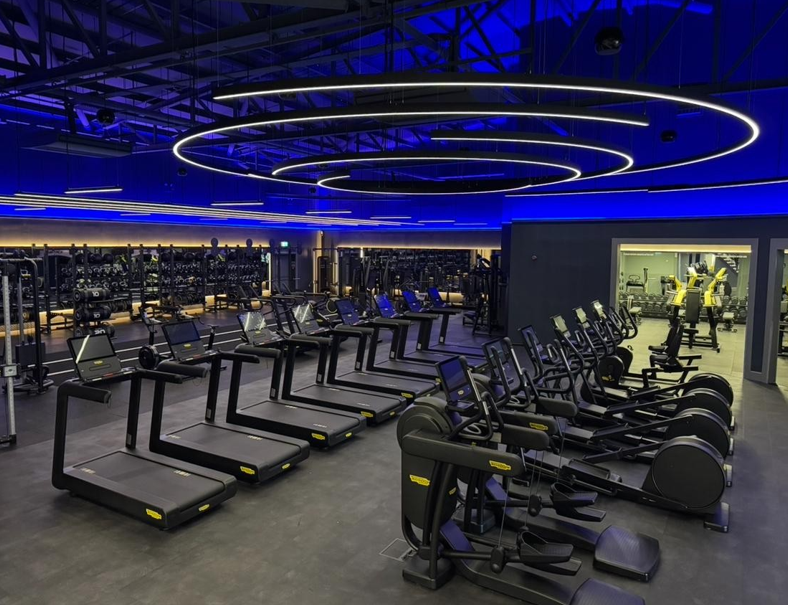
A key feature of the design is the use of Moondband 40 curved lighting track, arranged in varying lengths to form a layered, sculptural centrepiece. Suspended within the main gym floor, the rings create the impression of movement in motion, anchoring the space visually while delivering both direct and indirect illumination. Installed in close coordination with Emerald Group UK & Ireland, the feature elements were precisely positioned to integrate seamlessly with the exposed services and ceiling arrangement.

Above the functional training zone, Five Bow H with Flat Lens delivers consistent, high-performance linear illumination. Aligned with the 13-metre turf track and equipment layout by Technogym & Balance, it mirrors the floor geometry to create a cohesive composition that reinforces direction and pace during high-intensity sessions. In the studios, a colour-changing RGBW blue version allows scenes to adapt to different class formats, while indirect blue uplighting washes the dark grey soffit in Better Gym’s signature colour, adding depth without compromising functional light levels.

Elsewhere, Value Down spotlights ensure clear, welcoming illumination through entrance and circulation areas, guiding members intuitively through the space. Nova Medium 62 suspended fittings define the Members’ Hub, introducing a softer layer of light suited to social interaction and recovery. In the free weights area, Target Line surface-mounted luminaires provide focused, practical illumination that supports safe and effective training while maintaining the scheme’s clean visual language.

Throughout the scheme, the balance between performance and atmosphere remained central. Each zone is lit according to its functional demands, yet unified through the considered integration of direct and indirect light, linear forms and brand-led colour accents. The result is a flexible lighting environment that enhances visibility, supports wellbeing and amplifies the motivational energy of the gym floor.

Commenting on the project, Paul Shoosmith, Director at Light Forms, said: “Better Gym Connswater has been an exciting opportunity to explore how lighting can express movement and brand identity within a high-performance environment. By combining sculptural feature elements with robust, functional illumination, we’ve created a scheme that motivates members, supports operators and brings a renewed sense of energy to the space.”

With its layered custom features, precision-aligned linear systems and immersive detailing throughout, the Better Gym Connswater project showcases how Light Forms’ product families can transform a fitness environment into a cohesive, future-focused destination for its users.

Project credits:
Project Manager: GLL
Architect: Zynk Design
Contractor: Emerald Group UK & Ireland
Equipment Supplier: Technogym & Balance
Lighting: Light Forms

Photography: Emerald Group UK & Ireland

Categories
industry updates

Understanding the next evolution of the Wiring Regulations

The forthcoming publication of Amendment 4 to BS 7671:2018 marks another significant step in the ongoing modernisation of the UK’s electrical installation standards.

Set for release on 15 April 2026, this amendment reflects the realities of an industry undergoing rapid technological transformation. Energy storage, digital infrastructure, Information and Communications Technology (ICT), and Power over Ethernet (PoE) driven smart buildings are reshaping the expectations placed on electrical systems. ICT refers to the networked digital technologies – data cabling, communication systems, servers and connected devices – that now underpin almost every building. PoE, meanwhile, is the method of delivering both power and data over a single Ethernet cable, enabling a new generation of intelligent, network-powered devices.

For installers, designers and specifiers, the amendment is not simply a list of new requirements. It is a signal of where the industry is heading – and why the regulatory framework must evolve to keep pace. Understanding the intent behind these changes is essential for anyone working on modern electrical installations.

One of the most notable additions is the introduction of a new chapter dedicated to stationary secondary batteries. The rise of energy storage systems has been one of the most significant developments in the built environment over the past decade. What was once a specialist technology is now becoming a common feature in homes, commercial buildings and industrial facilities. Batteries are increasingly used to support renewable generation, provide backup power or enable more sophisticated energy management strategies. The new chapter acknowledges this shift by offering clearer guidance on installation practices, protection requirements and integration with existing electrical infrastructure. It reflects a recognition that energy storage is no longer peripheral – it is becoming central to the way electrical systems are designed and operated.

Another important development is the introduction of Section 545, which addresses functional earthing and equipotential bonding for ICT equipment and communication systems. As buildings become more connected, the electrical installation plays a critical role in ensuring the reliability and performance of digital systems. Poor earthing or bonding can lead to interference, data loss or equipment malfunction. The new section provides a more structured approach to managing these risks, helping installers create environments where ICT systems can operate predictably and safely. This is particularly relevant as the boundary between electrical and digital infrastructure continues to blur.
Power over Ethernet is an example of that convergence. Once used primarily for low-power devices, PoE has rapidly expanded into a foundational technology for smart buildings. Cameras, access points, sensors and even lighting systems are increasingly powered and controlled through the same cable. With higher power levels and denser cable bundles, the thermal and safety considerations become more complex. Amendment 4 introduces guidance to help installers design PoE systems that are both safe and efficient, ensuring that the technology can continue to scale without compromising performance or safety. This is a recognition of PoE’s growing importance and a necessary step in supporting its continued adoption.

Perhaps the most substantial update comes in the form of a major revision to Section 710, which covers medical locations. Electrical safety in healthcare environments is uniquely critical. Patients may be connected to life support equipment that must operate without interruption, and even minor disturbances can have serious consequences. The revised section strengthens requirements around earthing, bonding and supply continuity, ensuring that installations in hospitals, clinics and care facilities meet the highest possible standards of resilience. This update reflects the increasing complexity of medical technology and the need for electrical systems that can support it reliably. Support equipment that must operate without interruption, and even minor disturbances can have serious consequences. The revised section strengthens requirements around earthing, bonding and supply continuity, ensuring that installations in hospitals, clinics and care facilities meet the highest possible standards of resilience. This update reflects the increasing complexity of medical technology and the need for electrical systems that can support it reliably.

Taken together, these changes illustrate a broader trend: electrical installations are becoming more integrated, more technologically sophisticated and more critical to the functioning of modern buildings.

For those working with wiring accessories, consumer units, circuit protection and distribution equipment, the amendment reinforces the importance of understanding how emerging technologies interact with traditional electrical infrastructure. Installers will need to consider not just the immediate requirements of a circuit, but the broader context in which it operates: the presence of ICT systems, the use of PoE, the integration of energy storage or the demands of a healthcare environment. The amendment encourages a more holistic approach to design and installation, one that anticipates the needs of increasingly complex systems.

As the industry prepares for the transition period following the amendment’s publication, the focus should be on familiarisation and forward planning. The six-month window before the previous edition is withdrawn provides time for installers and specifiers to understand the new requirements and consider how they apply to upcoming projects.

Amendment 4 acknowledges the technologies that are reshaping the built environment and provides a framework to ensure they can be integrated safely and effectively. For the electrical industry, it is both a challenge and an invitation – to stay informed, to adapt and to continue delivering installations that meet the highest standards of safety and performance.

Categories
industry updates

Ansell Lighting ‘Reveals’ New Undercabinet Range

Reveal is Ansell Lighting’s brand new collection of undercabinet lighting.

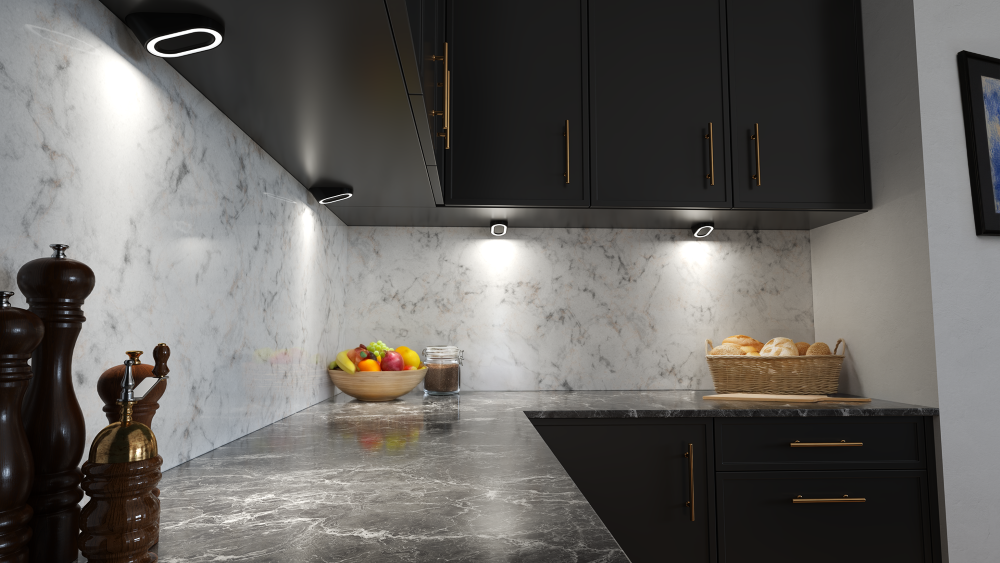
The elegant collection includes five sleek and modern luminaires, suitable for use in kitchens, wardrobes and other undercabinet applications.

The Reveal luminaires are designed for quick and easy installation thanks to plug-and-play functionality and a 4-way splitter that connects and powers up to four lights, with a low 12v voltage (12V) system for safe and efficient operation.

Providing perfect accent lighting for any style of kitchen, the Reveal designs include:

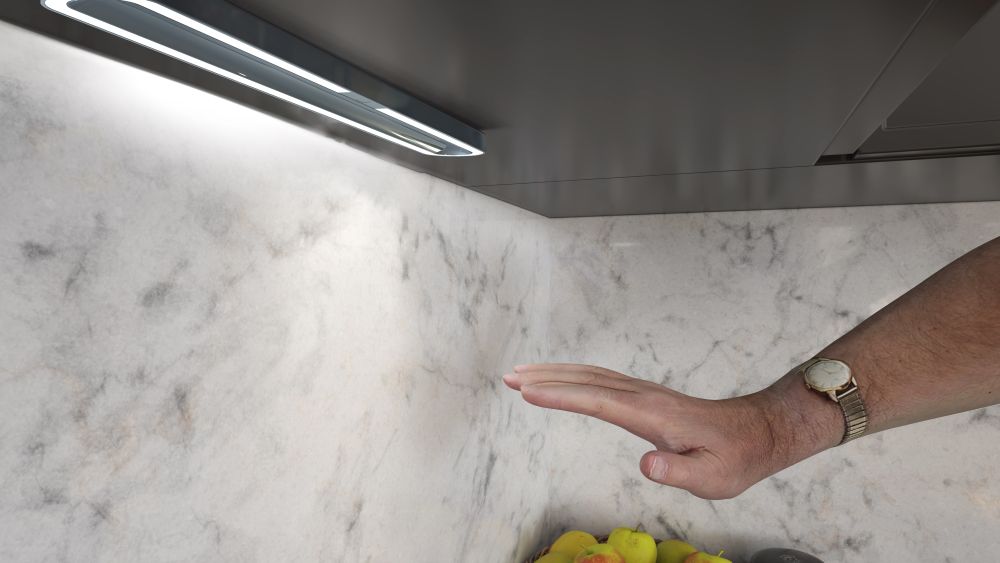
Reveal L – a sleek, L-shaped undercabinet light in polished silver finish with touch-free wave control
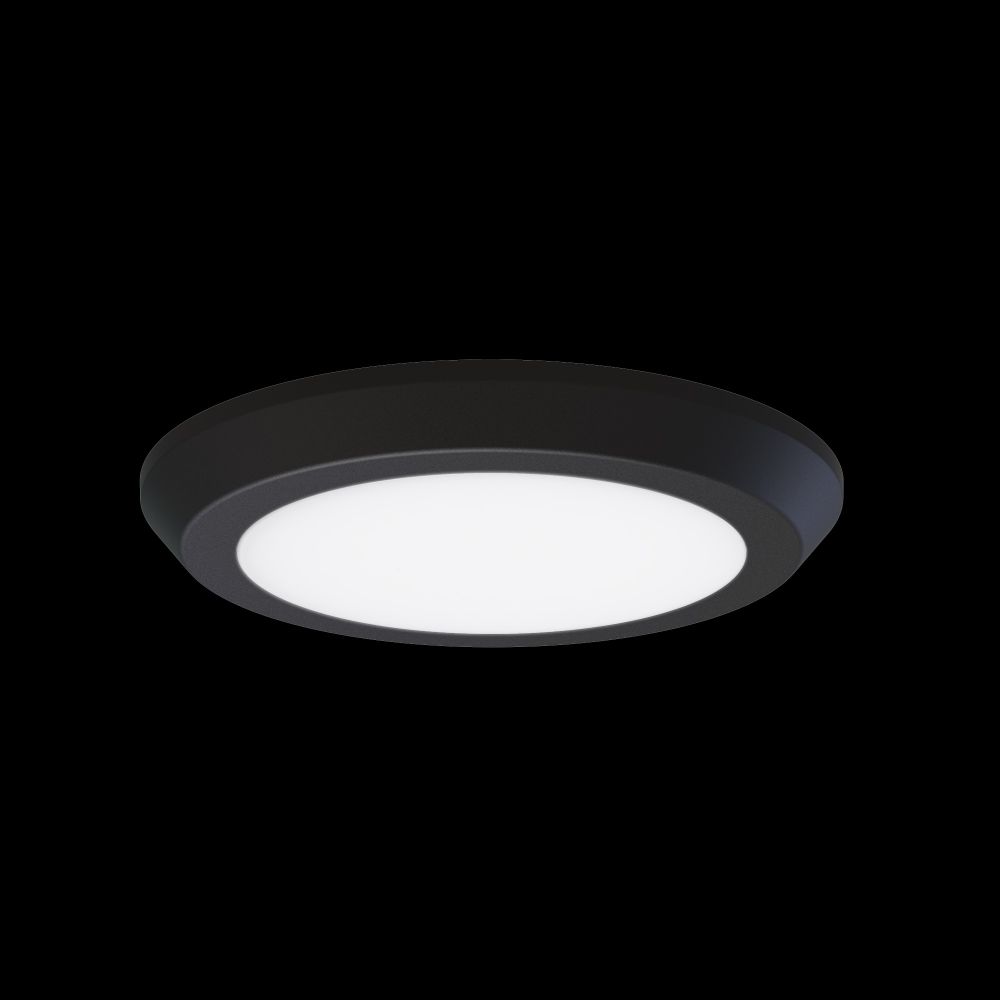
Reveal R – a circular 120mm luminaire and available in black and silver
Reveal P – a streamlined undercabinet light with touch-free wave sensor and integrated USB-C/USB-A charging ports, in silver and black
Reveal H – a stylish, silver baton-shaped touch-free luminaire available in 450, 600 and 900mm lengths with dimmable option
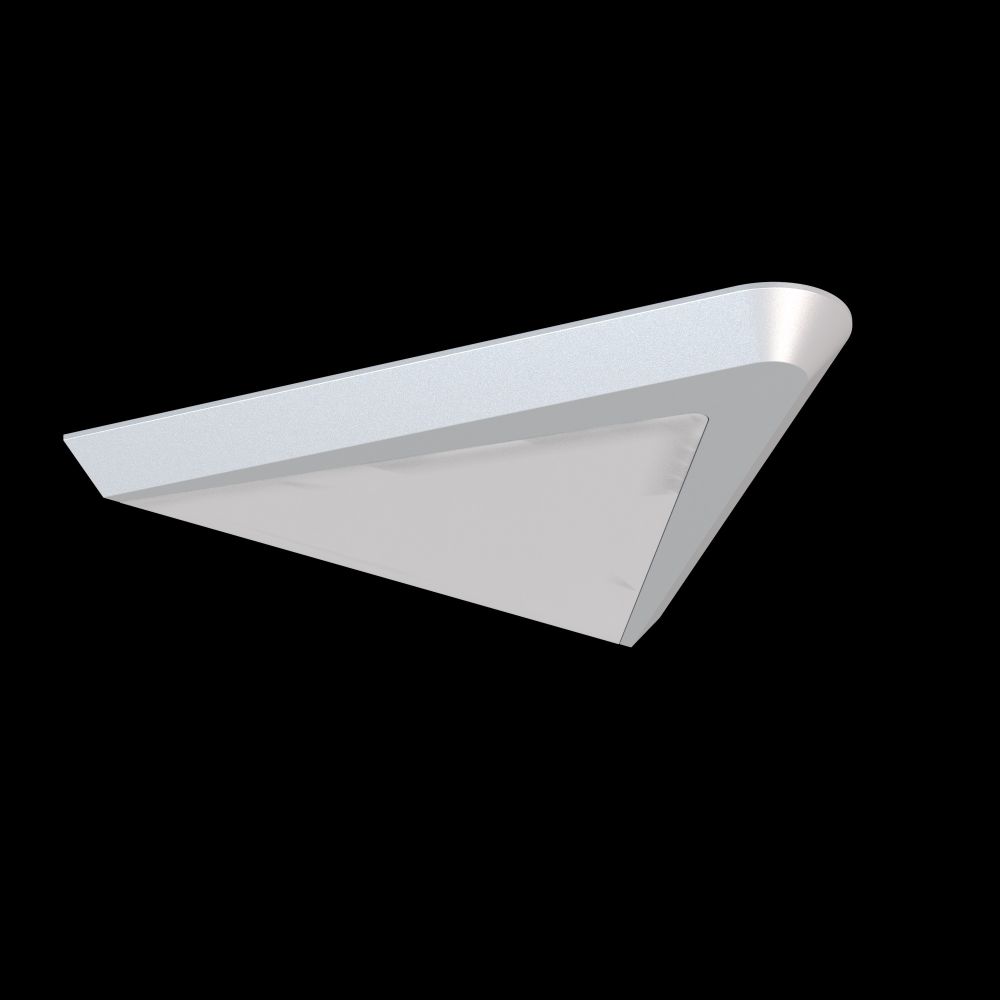
Reveal T – a modern triangular-shaped luminaire with touch-free wave sensor, dimmable option and available in silver and black
Equipped with an additional intelligent push switch, the Reveal L is CCT selectable between 2900K and 6500K, offering a choice of outputs in a single luminaire.

For functionality purposes, Reveal P has integrated USB-C and USB-A charging ports, offering convenient power options for mobile devices and accessories. Additionally, the L, P, H and T models offer wave sensor functionality for easy on and off control, while Reveal P, R and T are supplied in a kit which includes three lights, a driver, and a 4-way splitter (expandable to 4 lights).

Mark Abott, Managing Director at Ansell Lighting, said: “Undercabinet lighting is always in demand due to its versatility and functionality. We believe the Reveal range is the complete package – functional, installer-aware, and reliable while meeting illumination requirements and with a design to meet every residential application.”

Categories
industry updates

The DALI Alliance Announces New Resources and Recognizes the 2026 DALI Lighting Award Winners at Light + Building

The DALI Alliance, the global industry organization for DALI, the internationally-standardized protocol for digital communication between lighting control devices, will highlight major new developments at Light + Building 2026, taking place March 8–13 in Frankfurt, Germany, in Hall 8.0, Booth D80A.

This year’s presence focuses on expanding member access to enhanced technical resources, certification data, and interoperability tools – reinforcing DALI’s position as the leading open lighting protocol for intelligent, connected lighting systems.

The DALI Alliance will also proudly recognize the winners of the 2026 DALI Lighting Awards, celebrating outstanding projects that demonstrate creative, high-performance use of DALI technologies across architectural, commercial and industrial applications.

Paul Drosihn, General Manager of the DALI Alliance, said: “Light + Building is always a milestone moment for our community, and this year we are especially pleased to introduce new developments that give our members better access to the resources and data they rely on. These improvements strengthen the value of DALI as a global standard and reinforce our commitment to supporting improved education around open, interoperable lighting systems. We are also delighted to celebrate the 2026 DALI Lighting Awards winners, whose projects continue to push the boundaries of what is possible with DALI technology.”

Jeremy Ludyjan, Marketing Manager of the DALI Alliance, added: “Our focus this year has been on expanding the tools and information available to our members and the wider lighting industry, ensuring they can work more efficiently and with greater confidence in the interoperability of the DALI protocol. The enhancements we are unveiling at Light + Building reflect direct feedback from our global community. It’s inspiring to see how the industry continues to innovate, and the award-winning projects demonstrate the strength and versatility of the DALI ecosystem.”

The DALI Lighting Awards celebrate excellence across both Application and Innovation categories, recognizing outstanding projects that demonstrate creativity, technical expertise, and real-world impact. From human-centric lighting in workplaces to large-scale architectural installations and advanced smart‑building integrations, the winning projects highlight the creativity and technical expertise driving the next generation of lighting design.

Categories
industry updates

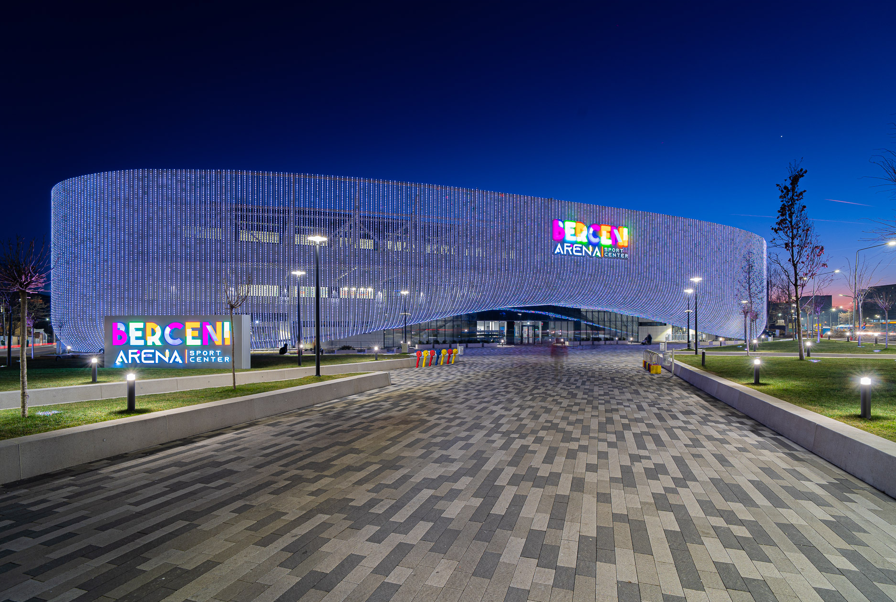
Dynamic façade and game lighting at Berceni Arena Ice Rink

The Berceni Arena Ice Rink in Bucharest, Romania, represents a remarkable example of modern technology integrated into urban and sports design, with a dynamic lighting control solution from Pharos Architectural Controls playing a key role in bringing the project to life.

This state-of-the-art facility represents the revival of ice sports in the Romanian capital. Its advanced lighting systems were developed and implemented by Power Electric, using the latest technologies to create a functional, aesthetic space suitable for high-level competitions.

The impressive façade is managed by no fewer than six 100-universe Pharos Designer LPC X controllers, each providing 51,200 channels of control. This third-generation 19” rack-mount LPC X is an all-in-one solution that is ideal for interactive and integrated lighting installations. The controller offers an extreme level of power and integration, making it the perfect lighting control solution for landmark lighting installations requiring significant channel counts. The six controllers at the Berceni Arena Ice Rink act seamlessly across the network.

The powerful flexibility of the LPC X provides pin-point control of individual fixtures, multiple overlapping groups and matrices allowing zones and sections of the façade to act as separate screens, or together as one cohesive canvas. The LPC X features individually controllable and independently running timelines and scenes allowing the dynamic façade lighting to reproduce a wide range of colours and animated sequences, creating a unique and visually captivating spectacle.

At the Berceni Arena the Pharos Designer LPC Xs are controlling a vast number of fixtures, as the facade is illuminated through 70,839 ColorFlex Micro RGB light points which are using the Color Kinetics network protocol KiNET, output directly from the LPC X over Ethernet.

A five-inch Pharos Designer TPS wall station offers elegant touch control. With a seamless, uninterrupted glass plate and fully customisable interfaces, the Designer TPS provides venue staff with the freedom of real-time manual scene selection, colour and intensity overrides.

Berceni Arena’s interior lighting system is specially designed for exciting sports competitions and high-definition TV broadcasts. The DALI-based interior game lighting system was addressed using four Pharos Designer RIO D. The system allows the lighting to be customised according to the event type, meeting the HD broadcast requirements for sports competitions and ensuring an excellent visual experience for the audience.

Ufuk Erel, Head of Sales & Marketing at Can & Power, said: “The dynamic façade transforms Berceni Arena Ice Rink into a visual landmark for the community, while the interior lighting guarantees ideal conditions for athletes and spectators while supporting high-quality media coverage. The Color Kinetics and Pharos system represent a cutting-edge implementation of modern lighting technologies in sports infrastructure.”

Teodora Marian, Regional Sales Manager for Central & Southern Europe at Pharos Architectural Controls, added: “Berceni Arena is a real feat of passion and dedication towards showcasing the power of ice sports in Bucharest. By utilising the Designer LPC, the façade is an appealing architectural accomplishment which captures the imagination of visitors and fans.”

Categories
industry updates

Lucent Lighting Strengthens UK Manufacturing Capability with Acquisition of Technical Assembly

Lucent Lighting, the UK-based architectural lighting manufacturer, is pleased to announce the acquisition of Technical Assembly, a specialist UK lighting assembly business. This strategic move significantly strengthens Lucent’s UK manufacturing and final assembly capabilities, reinforcing the company’s long-term commitment to British engineering, quality, and supply resilience.
The acquisition brings Technical Assembly’s experienced team, technical expertise, and established facilities into the Lucent Lighting group, enabling greater control over final assemblage, testing, and quality assurance processes within the UK. This enhanced capability will support Lucent’s growing project portfolio across commercial, residential, and hospitality sectors.

By expanding its UK operations, Lucent Lighting will be able to offer increased flexibility, shorter lead times, and greater responsiveness to bespoke project requirements, while maintaining the high standards of performance and design for which the brand is known.

This expanded capability will deliver tangible benefits for clients and specifiers across multiple sectors – including retail, commercial workplaces, hospitality, public realm, and high-end architectural projects – where programme certainty, customisation, and consistent product quality are critical. Enhanced UK configuring and testing capacity enables closer collaboration with lighting designers, architects, engineers, and contractors, supporting faster design iterations, project-specific modifications, and tighter quality control at the delivery stage.

The increased UK assembly capacity will also play a key role in supporting and enhancing Lucent Lighting’s ProCycle scheme, the company’s circular approach to extending product life through refurbishment, upgrade, and re-use. Bringing more final assembly and technical processes in-house will allow Lucent Lighting to more efficiently assess, rework, and reintroduce luminaires back into use, helping customers reduce waste and improve the sustainability of their lighting installations.

“This acquisition is an important step in strengthening our UK manufacturing footprint,” said
Lucie Sidwell, Global Operations Director at Lucent Lighting. “Bringing Technical Assembly into the Lucent Lighting group allows us to increase capacity, improve agility, and further invest in UK skills and expertise. It also enables us to expand our ProCycle scheme, supporting a more circular and responsible approach to lighting.”

The acquisition aligns with Lucent Lighting’s broader growth strategy, supporting continued innovation, sustainable manufacturing practices, and long-term investment in UK operations.