Categories
industry updates

Recolight Revive gives existing luminaires a second life

The initiative offers developers, building owners and facilities managers an alternative to wholesale
luminaire replacement. By retaining serviceable housings and components, Recolight Revive can help
reduce waste, disruption, material consumption and embodied carbon, while cutting operational
energy through more efficient light sources and controls.
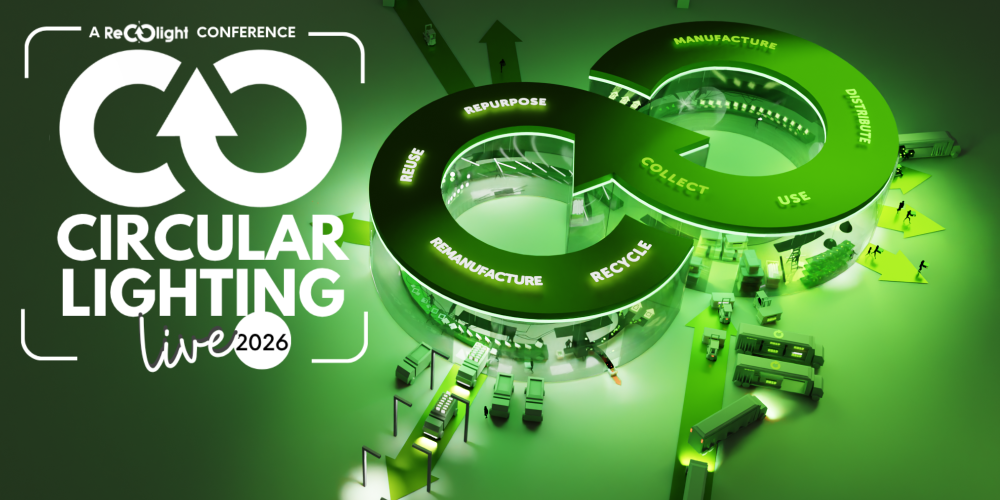
The launch was announced at Circular Lighting Live 2026, where speaker after speaker showed that
reuse and remanufacture are moving from the margins into mainstream lighting projects. Case
studies presented at the event demonstrated how remanufacturing can work both at scale and in
sensitive heritage settings.

Working with Recolight members
The service will work closely with Recolight producer members. Recolight Revive can act as a
remanufacturing subcontractor for producers that do not have suitable UK facilities, and where it
works directly with end users or building owners, Recolight will seek to involve its members in project
delivery.
Nigel Harvey, Recolight CEO, said: “For too long, an upgrade to LED has too often meant removing a
complete luminaire, even when the housing and optics remain perfectly serviceable. Recolight Revive
enables building owners to retain the materials and embodied carbon already invested in their
lighting, while benefiting from lower energy use. It is a practical way to keep lights in the ceiling and accelerate the transition to a lower carbon and circular lighting economy.”

Remanufacturing options
Revive supports fluorescent-to-LED conversion, LED-to-LED upgrades and the addition of wireless
controls. Each project begins with a low-cost site survey and bench evaluation of a sample luminaire,
followed by a detailed proposal and quotation.
Depending on the project, luminaires can be remanufactured on site, area by area, or at the Recolight
Revive facility, helping buildings remain operational throughout the work. The service follows BS
8887-221:2024, the code of practice for luminaire remanufacture, and includes assessment, testing,
documentation and recertification. Completed luminaires are backed by a five-year return-to-base
warranty.

The right upgrade
Thomas Bray of Recolight Revive said: “We apply engineering discipline within a straightforward
project process. We assess what is already installed, establish the most appropriate upgrade and
then test and document the remanufactured luminaire. Customers gain an efficient, compliant product
with a fresh warranty, without discarding valuable equipment that still has years of useful life.”
Simon Fisher of F Mark, who will provide design and engineering support to Recolight Revive said: “A
credible remanufacturing route gives specifiers and clients the confidence to treat existing fittings as assets, not waste. Recolight Revive provides a welcome bridge between circular ambition and
practical delivery on real projects.”

Reducing embodied carbon
Recolight says the initiative responds to demand for solutions that address embodied as well as
operational carbon. As expectations around repairability and upgradeability increase, retaining
products and materials for longer will become more important in responsible lighting specification.
Harvey added: “Recolight has long championed reuse and remanufacture alongside responsible
recycling. Recolight Revive turns that ambition into a direct service. We look forward to working with
our members to make remanufacture an option for lighting upgrades.”

Categories
industry updates

Dialight supports safe and efficient operations at new Port of Tilbury grain store

Dialight, the global leader in industrial and hazardous-location LED lighting, has supplied a complete lighting solution for a major new bulk grain storage facility at the Port of Tilbury in Essex, UK.
The Tilbury Berth 43 Cefetra Bulk Grain Store was completed in July 2026 and handed over to the Port of Tilbury, part of Forth Ports, shortly afterwards. Delivered by principal contractor Harmonix Construction, the project has transformed a former open-air container depot into a purpose-built storage facility designed to support the growing demand for imported grain handling and storage.
Grain storage presents particular safety and operational requirements, as airborne combustible dust can create a potentially explosive atmosphere. The internal area of the new store has therefore been designated as a Zone 22 hazardous area, requiring suitably certified lighting capable of performing consistently within a demanding industrial environment. The exposed port location also meant that luminaires needed to withstand wet, marine conditions.

Dialight became involved during the early design phase after Harmonix Construction first approached the company in November 2024. Following Harmonix’s appointment as principal contractor in February 2025, Dialight developed the lighting scheme using the construction drawings and the Port of Tilbury’s specifications. The design covered the grain store, surrounding external areas and a vehicle refuelling point, with particular requirements for operational areas including the quayside.
The final installation comprises more than 200 Dialight luminaires, including ProSite Floodlights, SafeSite luminaires, Emergency GRP Linears and Vigilant Bulkheads, selected to meet the different requirements across the site.

The project showcases a large-scale deployment of the Zone 22 ProSite Floodlight in a hazardous-area application. An initial scheme based on 110 SafeSite High Bay luminaires was refined to 78 ProSite Floodlights. The wider range of optical distributions available with ProSite enabled Dialight’s lighting designers to reduce the number of fittings required whilst also maintaining the specified light levels.

The design also needed to account for the shadowing created by the facility’s large traversing cranes, as well as the defined light levels required around the quayside and water’s edge. Careful positioning and alignment were necessary because of the building’s mounting heights, while the use of marine-grade luminaires supports performance in the exposed and wet conditions found within a port environment.
Aidan Brown, UK/EIRE Sales – EMEA at Dialight, said, “The project demonstrates the value of involving the lighting manufacturer early, particularly when a facility has hazardous-area classifications and several distinct operational requirements. Working closely with Harmonix allowed us to refine the design as the project developed. By using the different optical options available with the ProSite Floodlight, we reduced the number of luminaires required within the grain store while still achieving the specified light levels. The result is a lighting scheme that combines the required safety and performance with a more efficient use of equipment, supporting long-term reliability in a demanding port environment.”

Port of Tilbury is an established Dialight customer and has used the company’s ATEX-certified lighting during maintenance upgrades across existing parts of its grain terminal. Berth 43 provided the first opportunity for Dialight products to be incorporated into a new-build project at the port, allowing the environmental, safety and access requirements to be considered from the outset.

Jenis Mistry, Project Engineer at the Port of Tilbury, commented, “The new grain store has been developed to provide the safe, reliable infrastructure required for this important area of our operations. Lighting needed to meet the requirements of the hazardous internal environment, the external areas and the quayside, while also being suited to the exposed conditions at the port. The completed installation provides the light levels needed across these different spaces and supports the facility’s long-term operation.”

Close coordination between Dialight and Harmonix Construction continued throughout the design and delivery stages. Early product selection and advance ordering with Dialight’s factory helped ensure that the luminaires were available well before they were required on site, supporting the construction programme and installation process.

David Thrower, Project Director of Harmonix Construction, added, “The successful delivery of the lighting package was supported by early engagement and a close working relationship throughout the project. Dialight responded to changes in the construction design and developed the lighting scheme in line with the Port of Tilbury’s specifications. Having the products ordered and delivered well ahead of installation also gave our team the certainty needed to plan the work effectively.”

Alongside its ability to meet the project’s safety and performance requirements, the selected LED lighting provides a long-life solution for areas where access for future maintenance can be challenging. Dialight’s standard luminaires offer a rated life of more than 150,000 hours and are backed by a ten-year warranty, helping to reduce the frequency of replacement and associated maintenance interventions. Emergency lighting batteries will be included within the facility’s ongoing inspection and replacement programme.

The completed project demonstrates the importance of early collaboration, clearly defined lighting requirements and appropriate product selection when designing lighting for ports, grain stores and other complex industrial facilities. By combining hazardous-area certified products with considered lighting design, the scheme provides a robust solution for the Port of Tilbury’s new grain storage operation.

Categories
industry updates

DALI Part 151 Supports Surge Protection for Connected Outdoor Lighting

DALI Part 151 is moving from specification into certified products, providing manufacturers with a defined framework for protecting DALI control devices against induced electrical surges in outdoor lighting applications.

Developed by the DALI Alliance, Part 151 defines minimum requirements for surge protection where DALI control devices may be exposed to electrical transients. This can be particularly important in outdoor installations, where signal cabling running between luminaires and remotely mounted sensors or control devices can be affected by nearby lightning activity or switching events on adjacent power lines.

As outdoor lighting becomes increasingly connected, control devices are not always housed within the luminaire itself. Remote sensors and controls can require DALI and auxiliary lines to extend beyond the luminaire, introducing additional considerations around protecting connected devices from induced surges.

Paul Drosihn, General Manager of the DALI Alliance, said, “DALI Part 151 provides manufacturers with a consistent framework for addressing surge protection in applications where DALI control devices may be exposed to induced electrical transients. Seeing products certified to the specification demonstrates how these requirements can be applied in real-world outdoor lighting applications and supports the continued development of robust, interoperable DALI solutions.”

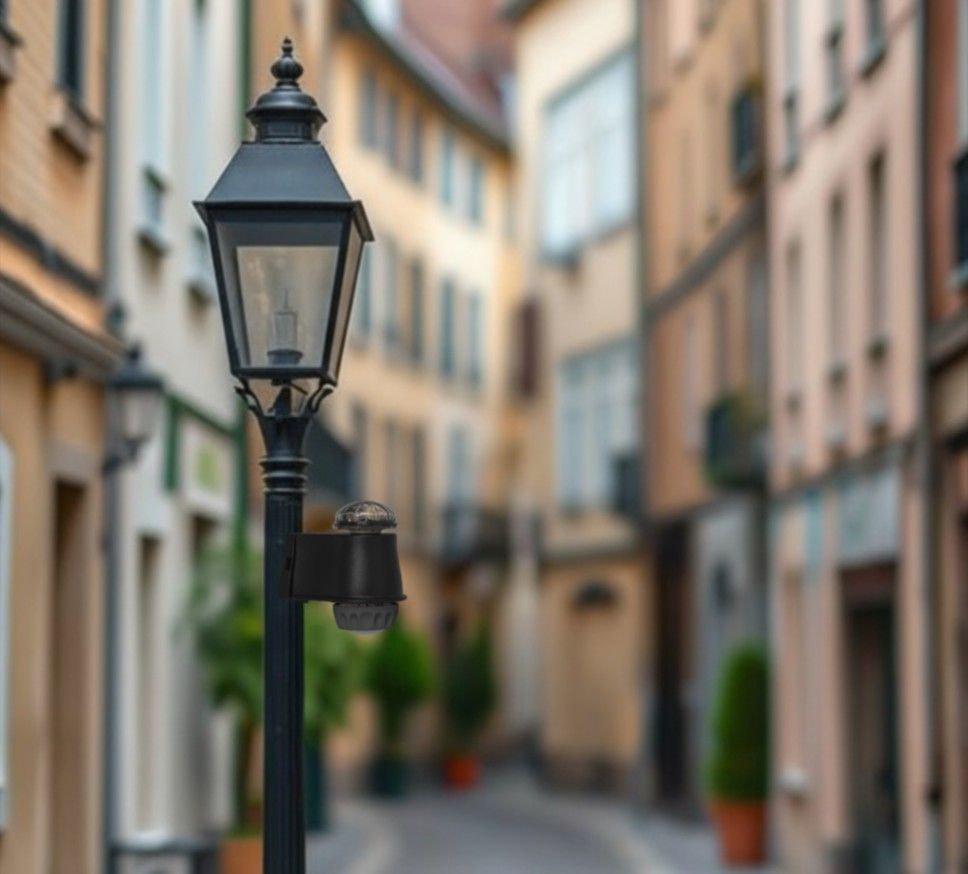
Among the products now certified to DALI Part 151 is TE Connectivity’s LUMAWISE Endurance bridge assembly. Designed to connect remotely mounted sensors or control devices to a luminaire, the pole-mounted solution extends control and power lines beyond the luminaire and incorporates surge protection on both the DALI and auxiliary lines. The product provides 800 V surge protection in both polarities.

The LUMAWISE Endurance bridge assembly is designed for applications including heritage and decorative luminaires, high-mast lighting and urban lighting, and is available with pole- and wall-mounted options. It can also facilitate controls to be retrofitted to existing LED luminaires in the field.

Jonathan Catchpole, System Architect, Connected Living Solutions Business Unit at TE Connectivity, added, “We recognise the importance of surge protection in streetlighting pole-mounted bracket assemblies, such as the LUMAWISE Endurance bridge assembly. Zhaga-D4i control devices have been available since 2019, but because they were typically mounted within luminaires, surge protection was not a key design consideration. This changed with the introduction of Zhaga Book 18 Edition 4, making this new DALI part an extremely important addition.”

The certification provides a practical example of how DALI Part 151 can be incorporated into products for connected outdoor lighting, helping manufacturers address surge protection while continuing to build on the interoperability provided by the DALI ecosystem.

Categories
industry updates

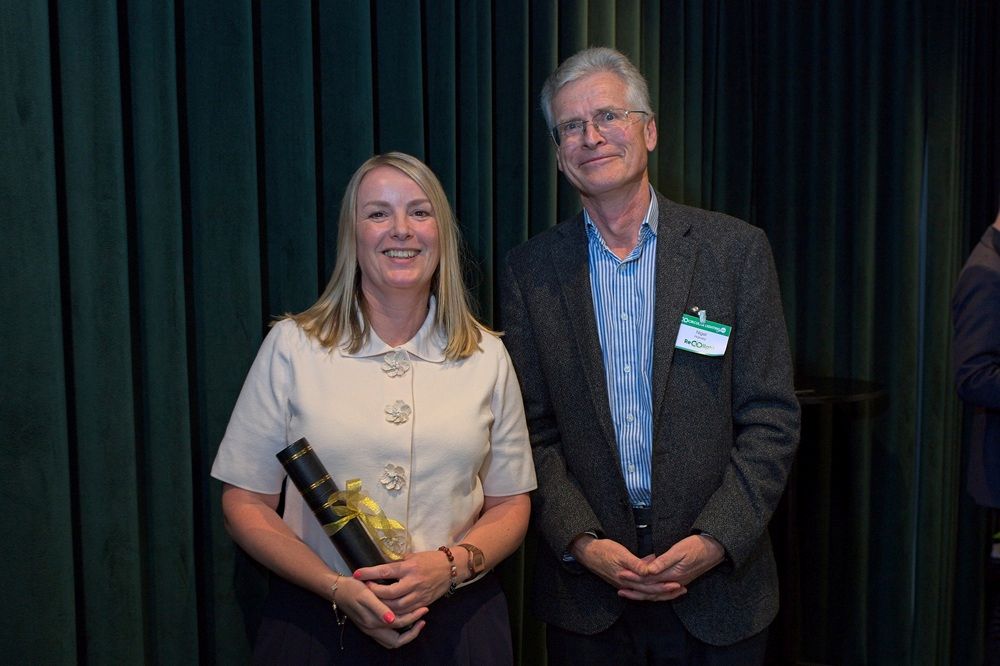
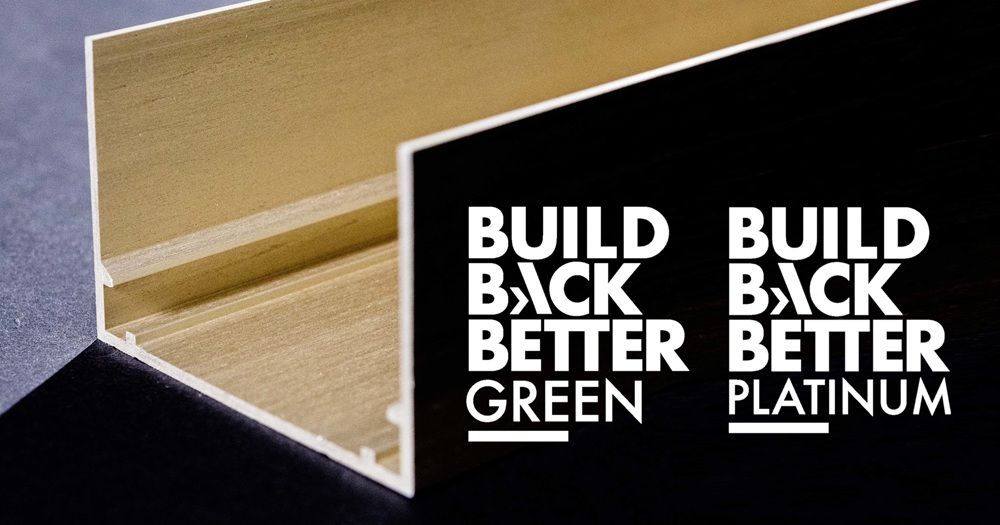
"Louvres in the Loop" Wins Platinum and Green Build Back Better Awards

October 2026 – A joint recycling project by lighting manufacturer TRILUX and metal
processing specialist OTTO FUCHS has won two awards at the Build Back Better
Awards 2026 in London: Platinum and Green. The judges recognized an innovative
process that transfors aluminium from old luminaire louvres into new luminaire
profiles without remelting. The award ceremony took place on 8 October 2026 during
"Circular Lighting Live 2026" conference at the Minster Building in London.
The Build Back Better Awards evaluate products, projects, and initiatives from the built
environment based on four criteria: innovation, creativity, social benefit, and environmental
responsibility. A panel of 24 experts judges the best submissions in the lighting category. The
Platinum rating is reserved for exceptional and pioneering submissions, while the Green
rating honours solutions with leading sustainability characteristics. TRILUX and OTTO
FUCHS entered the "Louvres in the Loop" project in the "Lighting" category.
The Project: Louvres in the Loop

Since January 2024, TRILUX and OTTO FUCHS have been working together on the
research project "Louvres in the Loop." The focus is on recovering and recycling aluminium
from old specular louvres and reflectors (post-consumer material) as well as from chips
generated during operations at OTTO FUCHS (pre-consumer material). In this innovative
process, the aluminium scrap is recycled without the material having to be melted down. As
part of the research project, a carbon footprint of less than 0.2 kg CO₂e per kilogram of
aluminium was determined for the production of the aluminium briquette (screening LCA
based on ISO 14040/14044, cradle-to-gate). For comparison: the informal limit for so-called
"low carbon" aluminium ingots is 4 kg CO₂e per kg, and some manufacturers already achieve
0.9 kg CO₂e per kg (internal research, as of 10/2026). On a global average, primary
aluminium accounts for 14.4 kg CO₂e per kg (year 2024), and aluminium produced in Europe
accounts for 6.6 kg CO₂e per kg (year 2023).
"The jury evaluated exactly what we aimed for in the project: keeping material in the cycle for
as long as possible – and to do so by rethinking not only the material but also the process.
Receiving Platinum and Green acknowledges both the technical innovation and the project's
approach to resource conservation," explains Sebastian Wurth, Product & Technology
Development Engineer at OTTO FUCHS.

Outlook
With the completion of the research project, both partners have created the conditions for an
innovative product. In the first step, TRILUX is producing a luminaire profile made of recycled
aluminium for customised luminaires. The RCY variants will be available in silver, gold, and
black.
"By developing a luminaire profile using our new aluminium recycling process, we are
encouraging a more responsible approach to material use and taking an important step
towards a circular economy," says Sebastian Knoche, Lead Researcher at TRILUX. The
market response has been positive. Initial pilot projects with customers have already started.

Categories
industry updates

Lucent Lighting brings warmth and precision to a private residence in Côte d’Or

Lucent Lighting has supplied a selection of architectural luminaires for a private residence in Côte d’Or, France, supporting a warm and carefully integrated lighting scheme developed by Su Bishop.
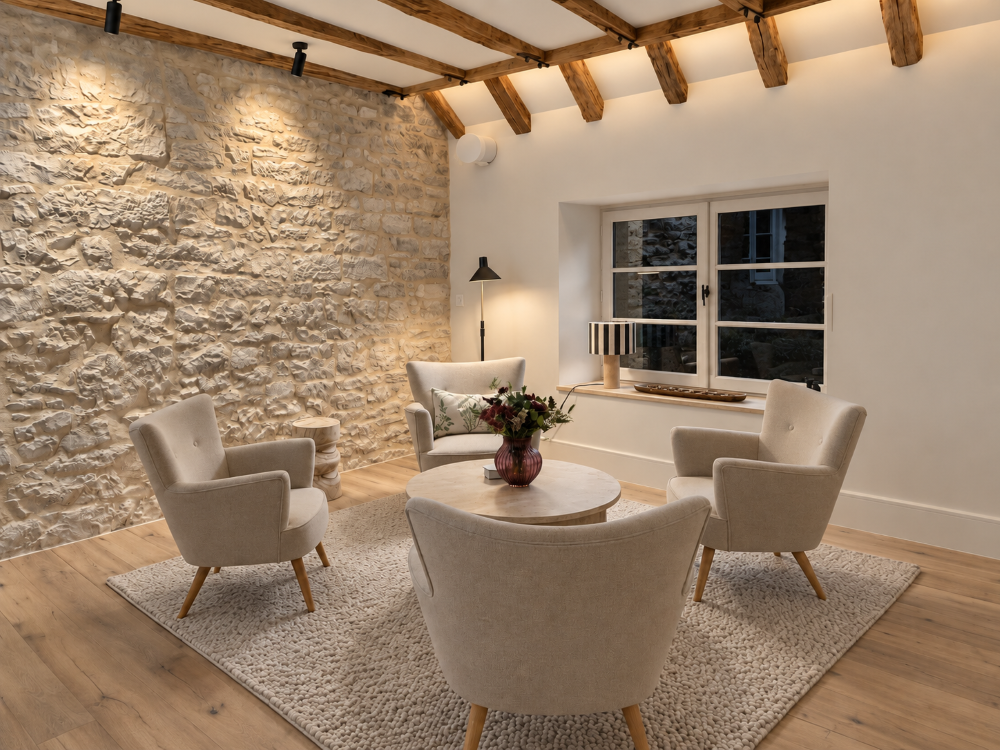
Designed and built by Arena Park France Developments, the residence combines natural stone, timber and traditional architectural details. The lighting approach was developed to complement these materials, using discreet architectural illumination to reveal the character of the building while creating a warm and welcoming atmosphere after dark.

Throughout the project, a 2700K colour temperature provides consistency across the scheme, enhancing the warmth of the stone and timber finishes while maintaining a comfortable residential feel.
Externally, Lucent Lighting’s recessed uplighters have been used to emphasise key architectural features. Narrow 15-degree optics provide focused illumination to columns and the entrance arch, drawing attention to the form and proportions of the architecture.

Elsewhere, luminaires with 10×45-degree elliptical wall-wash optics graze the local stone walls, revealing their natural texture and variation. Specified in an Antique Bronze finish, the fittings integrate discreetly within the surrounding material palette while providing controlled illumination to the building façade.

Lucent’s TubeLED Mini High Output surface-mounted luminaires, specified in a black finish, provide general lighting within the scheme. Their compact scale allows the fittings to sit discreetly within the architecture while delivering the performance required for the space.
Linear LED profiles and strips have also been integrated into beams and timber structures to provide indirect illumination. Concealing the light source allows the structure itself to become illuminated, highlighting the warmth and craftsmanship of the timber while adding another layer of soft ambient light to the residence.

The architectural lighting is complemented by AJ Wall lamps from Louis Poulsen, designed by Arne Jacobsen, introducing a decorative element alongside the integrated lighting.
Together, the different layers of light create a considered balance between functional illumination and architectural emphasis. Rather than competing with the character of the residence, the lighting works with its materials and structure, revealing stone, timber and architectural details while maintaining the intimate atmosphere of a private home.

Giovanni Premi, Specification Sales at Lucent Lighting, said, “High-end residential lighting is about creating atmosphere while allowing the architecture and materials to remain the focus. On this project, the combination of discreet, integrated light and carefully controlled illumination brings out the warmth and texture of the stone and timber, while creating a comfortable environment that feels entirely appropriate to the home. It’s a great example of how considered lighting can enhance the character of a residence without ever overpowering it.”

Products
Lucent Lighting INGROUND60 recessed inground uplighter – 15° optic
Lucent Lighting INGROUND60 recessed inground uplighter – 10×45° elliptical wall-wash optic, Antique Bronze finish
Lucent Lighting TubeLED Mini High Output surface monopoint – Black finish
Lucent Lighting LED profiles and LED strips
Louis Poulsen AJ Wall lamp, designed by Arne Jacobsen

Project Credits
Project: Private Residence, Côte d’Or, France
Architect / Design & Build: Arena Park France Developments
Lighting Designer: Su Bishop
Photography: Courtesy of Lucent Lighting

Categories
industry updates

Pharos to reveal major new developments at LiGHT 26

Pharos Architectural Controls will return to LiGHT this November, where the company will give visitors a first look at significant new developments coming to its Pharos Designer software.
Taking place at the Business Design Centre in London on the 18th and 19th of November, LiGHT 26 will bring together the architectural lighting community for two days of new products and technologies, talks and industry discussions.

Exhibiting on Stand 43, Pharos will use the show to offer a first look at the company’s most significant development to Pharos Designer software in recent years, demonstrating how these forthcoming technologies and features will open up new creative possibilities in dynamic lighting control.

Pharos Designer is a comprehensive dynamic lighting control solution, created for architectural, themed and entertainment environments. Its flexible programming and integration capabilities allow designers to create sophisticated lighting experiences across projects ranging from individual spaces and buildings to large-scale connected installations.

While full details of the announcement are being kept under wraps until the show, visitors can expect to discover new capabilities in Pharos Designer that deliver greater control over lighting effects, interactivity and colour.

The developments explore how dynamic lighting can move beyond fixed scenes and predetermined sequences, giving designers new ways to create lighting that is more responsive, adaptable and engaging.
At LiGHT 26, Pharos will show how the next evolution of Designer builds on these capabilities, creating new opportunities for designers to explore lighting that can respond more dynamically to its environment and evolve in real time.

Rather than simply previewing the latest technologies and features, the Pharos stand will give visitors an opportunity to experience what these forthcoming creative and practical capabilities mean for dynamic lighting design in practice.

The Pharos team will be on hand throughout the exhibition to showcase the new developments, answer questions and discuss how the technology can support designers looking to create increasingly responsive and immersive environments with light.
Alongside LiGHT, Pharos will also be exhibiting concurrently at IAAPA in Orlando, offering customers in the United States their own opportunity to discover what’s new.

Michael Crilly, Senior Product Manager at Pharos Architectural Controls, said, “LiGHT has always been a great opportunity for us to meet with the architectural lighting community, but this year we have something particularly exciting to share.

“We’ve been working on something new for a little while now, and I’m incredibly excited to share these significant developments at LiGHT. The revolutionary changes we’ve made to Pharos Designer unlock entirely new creative possibilities for dynamic lighting. We don’t want to give too much away ahead of the show, but what we can say is that visitors will be among the first to experience what the next evolution of Designer can do.

“For us, this is about giving designers even greater creative freedom and providing new ways for lighting to respond and evolve. We’re really looking forward to showcasing it for the first time at LiGHT 26.”

Marco Caamano, Marketing Manager at Pharos Architectural Controls, added, “This is a huge moment for Pharos and one we’ve been looking forward to for a long time. There has been an enormous amount of work happening behind the scenes, and what we’ll be showing at LiGHT represents a significant step forward for Pharos Designer.

“LiGHT will be one of the very first opportunities to see these developments in action and understand just how much more they offer designers creatively. If you work with Pharos, specify dynamic lighting control or simply want to see where the technology is heading next, Stand 43 is somewhere you’ll want to visit.”

Categories
industry updates

Dialight to Highlight Industrial LED Lighting Expertise at Automation Fair 2026

Dialight, the global leader in hazardous and industrial LED lighting, will bring its extensive experience in delivering reliable, energy-efficient lighting for demanding industrial environments to Automation Fair 2026, taking place November 16–19 in Boston, Massachusetts. Attendees can visit booth #1467 to meet with the team and discuss their industrial lighting needs.
Dialight was the first LED lighting Rockwell Automation Encompass Product Partner. With decades of expertise in industrial LED lighting and millions of fixtures installed worldwide, Dialight continues to support manufacturers and industrial operators in improving workplace safety, reducing maintenance requirements, and lowering energy consumption.

Automation Fair 2026 brings together manufacturers, technology providers, and industry professionals to explore the latest developments in industrial automation and manufacturing.
As manufacturers continue to adopt new technologies and invest in more efficient production processes, reliable lighting remains essential to maintaining safe and productive working environments. From production floors and assembly lines to warehouses and processing facilities, lighting must deliver consistent performance while withstanding the demands of industrial operations.
Dialight’s industrial LED lighting solutions are engineered for these environments, helping facilities reduce energy consumption, minimize maintenance requirements, and lower operating costs. Durable construction and long product life also help reduce the need for frequent replacements, particularly in facilities operating around the clock or where maintenance access can be challenging.
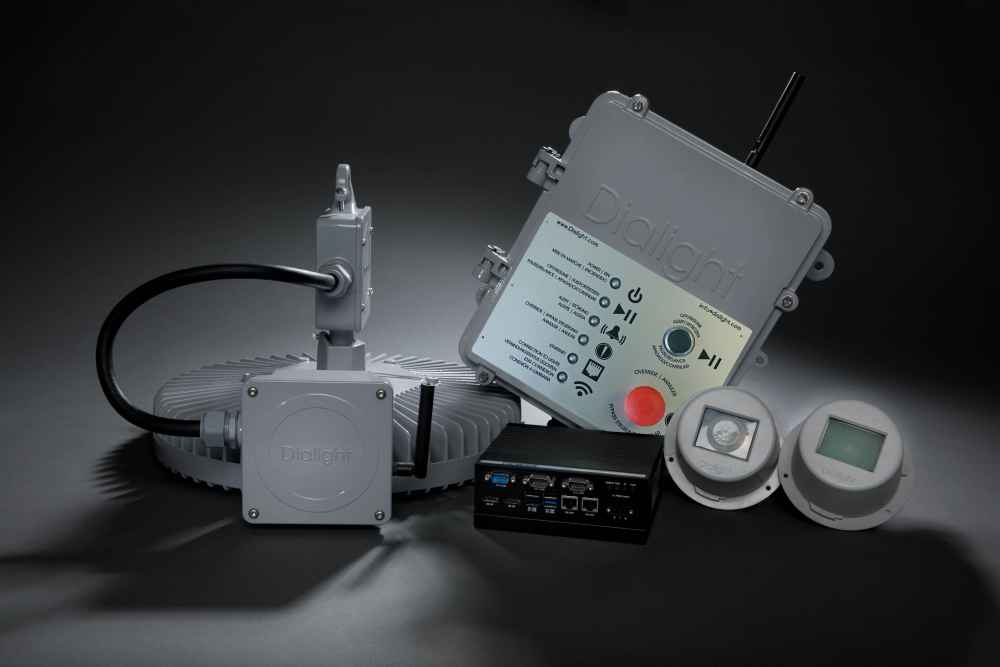
The Dialight IntelliLED™ system was designed with factory and building automation in mind and is the premiere industrial lighting system that can seamlessly integrate with existing industrial automation. Dialight’s offerings allow site managers to consolidate control systems and simplify maintenance procedures by integrating with their existing PLC.

Supporting a wide range of industries, including automotive, food and beverage, chemical processing, and heavy manufacturing, Dialight has developed a strong understanding of the lighting requirements found across complex industrial facilities. Its high-performance LED solutions are designed to deliver dependable illumination, even in environments exposed to vibration, extreme temperatures, dust, and other challenging conditions.

Representing Dialight at the event will be Tom Latanision, Director of Channel Sales; Cory Cook, Director of Sales; Jeff Hakenewerth, Regional Sales Manager; and Brandon Parenteau, Regional Sales Manager.

Ben Myer, Vice President of Sales at Dialight, said, “Automation Fair brings together many of the manufacturers and industry professionals we work with, making it an important opportunity to share our experience and understand the challenges facing industrial facilities.
“As manufacturing continues to evolve, the need for reliable, efficient infrastructure remains. Lighting plays an important role in creating safe working environments, reducing maintenance and helping facilities manage energy consumption.”

Categories
industry updates

Reuse, remanufacture and leasing emerge as the new drivers of lighting circularity at Circular Lighting Live 2026

Keeping existing luminaires in service, rather than replacing them, is moving from aspiration to everyday practice across the UK lighting industry.
Business models built around the reuse, remanufacture and leasing of luminaires are now driving circularity in the lighting industry. That was the key message from Circular Lighting Live 2026, held in the City of London on 8 October.

Organised by Recolight, the lighting industry’s WEEE compliance scheme, the conference showcased projects where light fittings were retained and refurbished rather than replaced. Speakers were candid about both their successes and the challenges still to solve.

Beyond the next new fitting

For decades, the lighting industry has run on a simple cycle: specify, install, remove, replace. When a fit-out comes round or a light source becomes obsolete, the fittings come down and new ones go up.
Circular Lighting Live 2026 showed that cycle is now being challenged on real projects and at real scale. Remanufacture, reuse and new commercial models are moving from the margins to the mainstream.

Remanufacturing comes of age

Remanufacturing is the most mature circular approach, and it has been practised for decades. What has changed is the pressure behind it. High energy costs and the phase-out of fluorescent light sources have left many buildings with sound luminaire housings but obsolete lamps.
The projects are getting bigger. DRK Lighting presented the remanufacture of 8,000 luminaires at a commercial site, showing that circular principles work at significant scale. Conversely, at Leadenhall Market in London, Light Projects Evolve remanufactured a much smaller quantity of historic fittings and developed a bespoke LED light source to preserve the building’s Victorian character.

Reuse is harder than it looks

Recovering luminaires for reuse is not simply a matter of taking them out of a ceiling and finding a buyer. Hattie Emerson of the Finishes and Interiors Sector shared lessons from attempts to redistribute thousands of good-quality fittings removed during Cat A fit-outs. She highlighted the practical obstacles to building a working market for second-hand products.

Rethinking design and business models

Delegates heard that it is commercial arrangements that will determine if circularity will succeed or fail. Reuse, remanufacture and leasing all keep value in the product, rather than losing it when the product is replaced. Recognising that value in financial terms is important.
In his keynote address, John McRae, director of architectural practice Orms, challenged the industry to imagine a future beyond the conventional take-make-use-waste model. Sabine De Schutter, founder of Studio De Schutter, argued that reuse and upcycling can be starting points for creative lighting design rather than constraints.

Carbon, materials and regulation

Speakers examined Environmental Product Declarations (EPDs), updates to the TM66 circularity methodology, and legislation expected to put more emphasis on repairability and upgradeability. Embodied carbon looks set to sit alongside energy efficiency in every good specification.
Sessions also explored lower-impact materials and manufacturing, including bio-based plastics and robotic additive manufacturing using recycled materials.

What it means for the industry

For manufacturers, contractors, specifiers and lighting designers, the implications are practical:
• Existing luminaires should be assessed as assets before they are written off.
• Remanufactured fittings with a fresh warranty are becoming a credible option on mainstream projects.
• Clients are more likely to ask about remanufacture, EPDs and what happens to products at end of life.
• New business models and markets are emerging for lighting companies.
What the delegates said

John McRae, Director, Orms (keynote speaker):
“This year’s conference was a step change towards a more circular approach where speakers shared their innovation and lessons learned. The industry has been guilty of an addiction to selling new, but this year disassembly and take-back schemes were amongst the examples shared. The future of lighting is not brighter. It is wiser.”

Gary Thornton, Nulty:

“I think it was probably the most informative and positive Recolight conference yet. Lots of real-world examples exist, but we must continue to normalise reuse. As far as we have come, the industry is approaching a tipping point. Continue to push forward repair and regeneration rather than new at every opportunity.”

Niclas Thulin, Sustainability Manager, Fagerhult:

“If we are to increase reuse within our industry, we must start with what already exists. The requirements for reused products cannot always be identical to those for newly manufactured products. Instead, these limitations should be viewed as a catalyst for creativity, for example in lighting design.”

Sabine De Schutter, Founder, Studio De Schutter:

“For the lighting industry, moving beyond ‘buy, build, waste’ means shifting from product thinking to system thinking. One of my key takeaways was that circularity is a team sport. Conferences like this help turn shared knowledge and real examples into action.”

Mike Eddowes, Design Director, Circalume Lighting Design Practice:

“True sustainability isn’t just about designing for tomorrow; it’s about maximising the embedded carbon and potential of what we already have today. The conversation has decisively shifted from theoretical concepts to practical, scalable delivery.”

Alexander Flekler, WAGO:

“Circular Lighting Live was a truly inspiring experience. I was particularly impressed by how active the reuse and refurbishment scene in the UK lighting industry already is, with so many real projects showing that circularity is much more than just a concept.”

Matthew Thorpe, Sales Director – A&D, Fagerhult:

“An excellent forum to learn about the latest innovations and best practice in circular and sustainable [lighting]. It really felt like everyone left inspired to do more, and do better, for the planet.”
Looking ahead

Together, the presentations pointed to a shift in how the industry designs, procures and manages lighting. The direction is clear: preserve the value of what is already installed, extend its useful life, and build the commercial models that make circularity pay.

Categories
industry updates

LEDVANCE publishes 2025 Sustainability Report: progress on decarbonisation

EcoVadis Gold, energy-efficient lighting solutions and investment in renewable energy support LEDVANCE’s sustainability strategy.

LEDVANCE, one of the world’s leading providers of lighting solutions, has published its Sustainability Report for the 2025 financial year, setting out the company’s latest progress and initiatives across environmental, social and governance (ESG) performance.

Under its guiding principle, ‘Power Through Light’, the report outlines the steps LEDVANCE is taking to reduce its environmental impact, improve the sustainability of its operations and develop more energy-efficient lighting solutions.

For the first time, LEDVANCE has also voluntarily aligned its sustainability reporting with the European Corporate Sustainability Reporting Directive (CSRD), providing a consistent framework for measuring and communicating progress and supporting greater transparency across the business.

Improving the energy efficiency and circularity of its product and solutions portfolio remains central to the company’s approach. During the 2025 financial year, 97.1 per cent of the overall portfolio was classified as eligible under the EU Taxonomy Regulation, reflecting LEDVANCE’s long-standing focus on energy-efficient LED and smart lighting technologies.

In October 2025, LEDVANCE also achieved an EcoVadis Gold rating for the first time. EcoVadis assesses companies across a range of sustainability criteria, including environmental performance, labour and human rights, ethics and sustainable procurement. The Gold rating places LEDVANCE among the top five per cent of companies assessed by EcoVadis globally.

Investment in renewable energy

Alongside its product portfolio, LEDVANCE continues to invest in reducing the environmental impact of its own operations, including increasing the use of renewable energy across its international sites.

One example is a new 400 kW solar installation at the company’s Molsheim site in France. The photovoltaic system generates renewable electricity for local operations, helping to reduce the site’s carbon footprint and its reliance on externally generated electricity.

LEDVANCE is also continuing to identify opportunities to improve energy efficiency across its production and logistics facilities worldwide.

Sandra Streib, Sustainability Manager at LEDVANCE, said, “Our 2025 Sustainability Report shows how we are turning our climate targets into concrete, measurable processes. By aligning early with the EU’s CSRD requirements and investing in our own renewable energy generation, such as at our site in Molsheim, we are delivering tangible change and actively and transparently driving forward the sustainable transformation of our industry.”

Looking ahead

LEDVANCE has set climate targets for 2030 and 2050 and is continuing to develop its approach to reducing emissions across its operations and wider value chain.

This includes expanding its global ESG data management to improve the measurement and tracking of environmental performance, alongside greater engagement with suppliers to address emissions associated with Scope 3.

The company is also looking at how sustainability considerations can be integrated more closely into operational decision-making, supporting continued reductions in emissions from its own activities while contributing to the wider transition towards lower-carbon business practices.

Categories
industry updates

Advanced lighting control transforms Citadella renovation

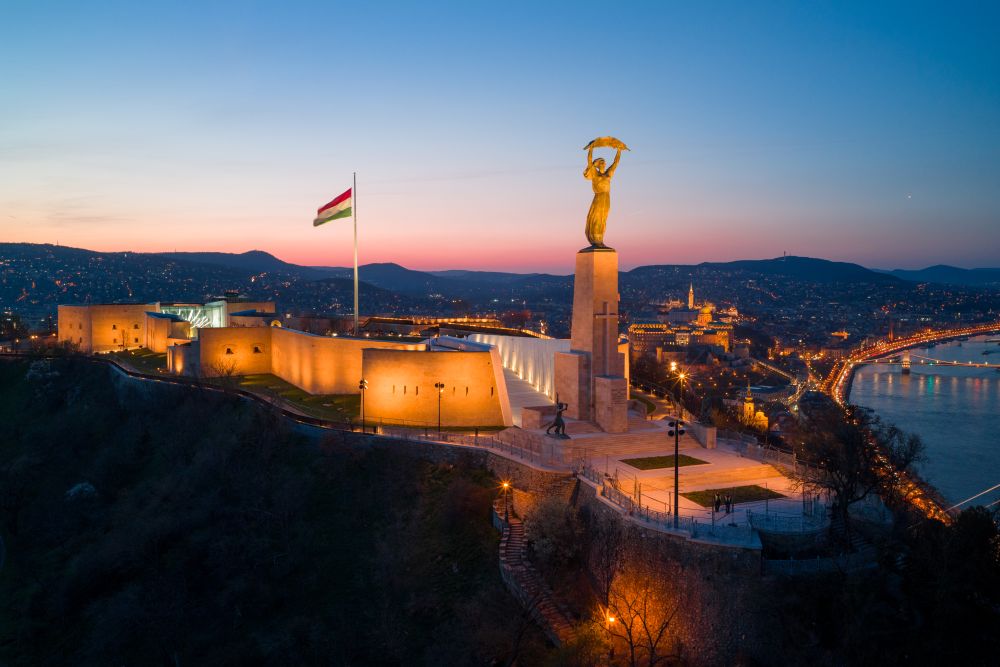
Advanced lighting control technology from Pharos Architectural Controls has been specified for the comprehensive renovation of Budapest’s Citadella, bringing flexible, robust and intuitive lighting control to a landmark project that reimagines Hungary’s largest citadel as an exhibition space and public park. Standing atop Gellért Hill since the mid‑19th century, the fortress has long been a defining feature of the city’s skyline and a powerful symbol within the nation’s history.

Originally constructed in the 1850s under General Haynau, the Citadella was built as a commanding fortification overlooking Budapest, and more recently has undergone one of the country’s most complex heritage reconstruction programmes. This latest phase of work transforms the site into a major tourist destination, with new exhibition areas dedicated to Hungarian history and a carefully landscaped walking environment that opens up the ramparts, terraces and viewpoints to the public as never before.

The lighting brief called for a scheme that could support the renovated site by revealing the Citadella’s architecture in a respectful yet engaging way, both for the exhibition interiors and across the surrounding paths and public spaces. Lighting designers All Light Kft. developed an approach that balances clarity and atmosphere, using light to guide visitors through the site, highlight historically significant elements and ensure the fortress remains a welcoming landmark after dark.

Delivering this concept required a control platform capable of managing multiple areas and modes of operation, from daily exhibition scenes to special-event programming and seasonal adjustments. All Light specified a solution from the Pharos Express range, with an Express Control lighting controller supported by two RIO G4 devices, each providing four DMX output ports to distribute DMX data to the façade lighting fixtures across the site. An Express Touch 5 touchscreen was also installed to provide local user control, giving the project team intuitive access to scene selection, scheduling and day-to-day operation. Together, these products deliver a reliable and flexible architectural lighting control solution for the Citadella renovation.

Benedek Bogárdi, Social Media Manager at All Light Kft, said, “For us, the Citadella is not just a building, but a chapter of Hungarian history. With Pharos, we gained the precise, reliable control needed to layer the exhibition and exterior lighting so that visitors can experience this history in a clear, contemporary way, without losing the fortress’s character and charm.”

Teodora Marian, Regional Sales Manager Central & Southern Europe at Pharos, added: “The Citadella renovation shows how thoughtful lighting and lighting controls can give new life to a historic landmark. With Pharos at the heart of the lighting control system, the project team can adapt and evolve the lighting over time, creating different moods and experiences for visitors while keeping everyday operation simple and reliable.”

The result is a flexible control solution that complements the lighting scheme, helping the renewed Citadella showcase its layered history whilst serving as an important national building. By uniting heritage architecture, new exhibition spaces and walking routes within a single control platform, the project demonstrates how Pharos technology can help illuminate complex historic sites with care and sensitivity.

Project Credits
Client: Várkapitányság Nonprofit Plc
General Contractor: ZÁÉV Zrt
Lighting Design: All Light Kft.
Lighting Controls: Pharos Architectural Controls

Photography: ZÁÉV Zrt