Categories
industry updates

Thorlux Lighting celebrates 90 years at the forefront of UK luminaire manufacturing

UK-based lighting manufacturer Thorlux Lighting is marking its 90th
anniversary throughout the summer with charity events and the opening of a refreshed visitor
centre at its Redditch, Worcestershire headquarters. As the company continues to innovate and
works towards a validated net-zero target, its future remains bright.

Founder Frederick William Thorpe first manufactured Thorlux luminaires in 1936. Based in a small factory in Small Heath, Birmingham, the company initially made vitreous enamelled steel reflectors.
This was the beginning of a journey that would see Thorlux grow into a globally recognised
manufacturer of luminaires and lighting control systems, becoming the largest company in the FW
Thorpe Group.

Thorlux has installed a spinning lathe used since the 1930s as the centrepiece of its refreshed
Thorlux Application Centre. The centre also includes an improved Emergency Lighting Experience,
providing guests with a realistic, educational power failure escape scenario.

Thorlux remains at the forefront of modern UK luminaire manufacture, with multi-million-pound
investments in advanced technology at its Redditch factory. The company still proudly makes over
90% of its products in the Midlands, employing five hundred people locally. Thorlux specialises in
energy-efficient, sustainable products, and is working towards achieving net-zero emissions by 2040.
Mark Stevenson, Marketing Lead at Thorlux, said: “90 years is a major milestone for Thorlux. As aproud UK manufacturer, it is important to reflect on our accomplishments so far – from pioneering energy-saving controls to relighting the

Categories
industry updates

CU Phosco Strengthens UK Sales Team with Appointment of Andrew Hiscott

CU Phosco has appointed Andrew Hiscott as Area Sales Manager for the North
West and West Midlands, reinforcing its continued investment in supporting
customers across the highways and street lighting sectors.

Andrew joins the business on 29 June from the Aluminium Lighting Company (ALC),
where he was National Business Development Manager covering the UK and
Europe. Well known throughout the industry, he has built a strong reputation for his
technical knowledge of lighting columns and infrastructure, together with long-
standing relationships across local authorities, contractors and consultants.
An active member of the industry, Andrew also serves on the HEA Council and is a
member of the Institution of Lighting Professionals (ILP).

Andrew Hiscott said:
"I'm delighted to be joining CU Phosco and becoming part of a business with such a
strong reputation for quality, innovation and customer service. I've worked alongside
the team for many years and always admired its technical expertise and commitment
to supporting customers. I'm looking forward to working with both existing and new
customers across the North West and West Midlands."

Matt Murray, Sales Director at CU Phosco, commented:
"Andrew is one of the best-known and most respected people in our industry, so
we're delighted to welcome him to the team. His technical knowledge, customer-
focused approach and strong relationships across the sector make him a fantastic
addition to CU Phosco. As we continue to grow the business, his experience will be
invaluable in supporting customers across the region."

Andrew's appointment reflects CU Phosco's ongoing investment in its UK sales team
and its commitment to providing customers with experienced local support backed by
market-leading lighting and infrastructure solutions.

Categories
industry updates

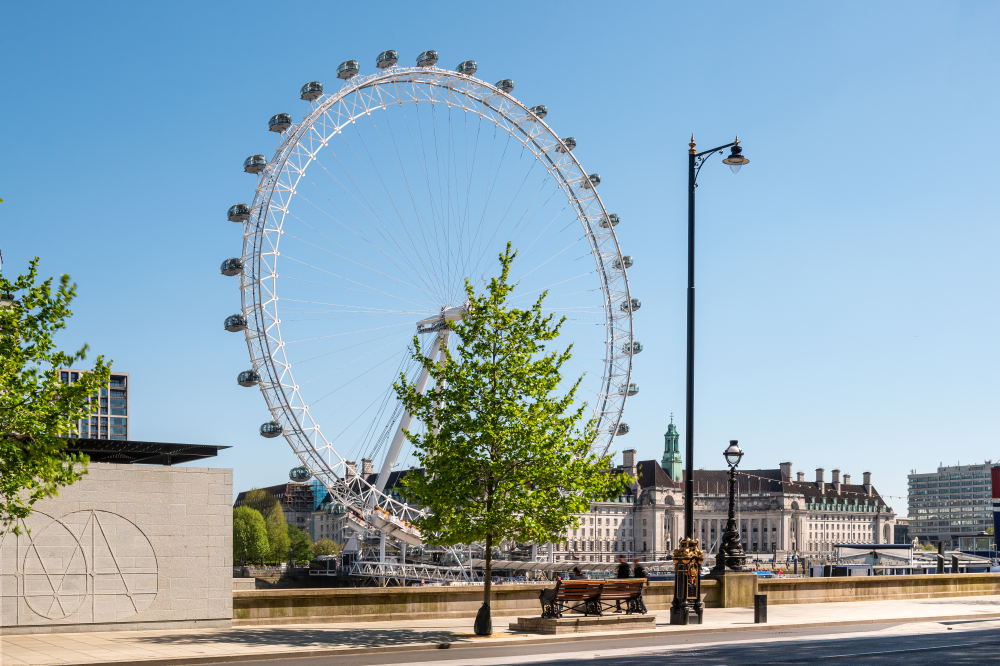
DW Windsor helps to preserve Victoria Embankment’s lighting heritage

The Thames Tideway Tunnel is a £4.6 billion infrastructure project designed to modernise London’s ageing sewer network. As part of the project, several sites along the Thames were expanded to accommodate the additional infrastructure required for the tunnel, creating new riverside public spaces and prompting upgrades to existing lighting assets.

At Tyburn Quay and Bazalgette Embankment, these works brought two distinctive heritage lighting installations into focus. Delivered for Transport for London and the City of London Corporation respectively, the schemes formed part of Tideway Central, led by FLO Joint Venture, with FM Conway and consultant WSP among the wider project team.

Drawing on its long-standing experience working with historic lighting across central London, DW Windsor supported the delivery of both schemes, retaining the defining features of each installation while introducing the structural, lighting and control technologies needed for their continued use.

The road running alongside Tyburn Quay is lined with a mix of original Grade II-listed cast column bases and a number of later replicas. Dating from 1900, the original bases feature dolphins, floral detailing and representations of Britannia.

While the project required the lighting installation to be upgraded, preserving these historic bases was an important part of the brief. Each casting was removed from site and transported to DW Windsor’s Hertfordshire factory, where the company’s specialist restoration team repaired and repainted the decorative finishes in their distinctive combination of black, red and gold.

As part of the upgrade, new reinforced steel columns designed to retain the proportions and appearance of the originals were installed. These were completed with traditional scroll brackets and finials finished in a custom gold paint to complement the decorative elements on the bases. Strand lanterns were then fitted as a like-for-like replacement for the previous luminaires, preserving the familiar appearance of the lighting.

The lanterns incorporate efficient LED lighting technology and Zhaga sockets, currently fitted with Zhaga photocells. This future-proofs the installation by allowing CMS nodes to be added should Transport for London adopt a central management system at a later date.

Once the work was complete, DW Windsor worked alongside FM Conway to transport the restored column bases back to site and assist with their reinstallation, helping to minimise handling and protect these important heritage assets.

At Bazalgette Embankment, the project team faced a different heritage challenge. The existing lighting featured George Vulliamy’s iconic dolphin pedestal design, better known to many as the Sturgeon lamp post, originally created for the Victorian Embankment works and now one of the riverside’s most recognisable features. While the sculptural bases and cradles were retained for their architectural and historic significance, the globe lanterns above required replacement.

DW Windsor was tasked with recreating the original appearance while developing a completely new internal lighting system. The solution needed to deliver modern performance, improved control and easier maintenance without detracting from the character of the historic installation.

The age of the cradles made this particularly challenging. Created using historic manufacturing methods and exposed to decades of weathering, the individual structures varied in dimension and condition. Working with specialist installer London and Kent, DW Windsor developed an adjustable mounting system that allowed each new globe lantern to be fitted securely within its existing cradle.

Inside the recreated globe, two separate LED systems perform distinct roles. A CoB LED provides the principal downward illumination, with a rear shield helping to reduce light spill back towards the Thames, while a second light source softly illuminates the upper section and opal lid, preserving the characteristic glow and visual presence of the original globe.

Specified at 2700K, the new lighting produces a warm appearance suited to the historic riverside setting. Urban Control’s CMS technology was also incorporated discreetly within the globe, with the antenna concealed inside the fitting so that the external appearance remained unchanged.

Both Tyburn Quay and Bazalgette Embankment highlight the importance of balancing heritage preservation with modern lighting requirements. By retaining significant original features wherever possible and replacing only those elements requiring renewal, the schemes preserve the established character of Victoria Embankment while introducing improved performance and control.

Robert Maisey, Operations Director at DW Windsor, said: “At Tyburn Quay, the priority was to retain the character of the original installation. Restoring the bases and upgrading the columns, brackets and lanterns allowed us to bring the scheme back to life while introducing the structural strength and technology needed for the future.”

Alex Winship, Specials Product Design Manager at DW Windsor, added: “The challenge at Bazalgette Embankment was to recreate the appearance of the original globes while completely redesigning their internal lighting architecture. By combining two light sources, discreet CMS integration and an adjustable mounting system, we were able to preserve their familiar glow while delivering modern lighting performance.”

The schemes form part of DW Windsor’s wider contribution to the Thames Tideway project, which has included the supply of heritage and contemporary lighting across several locations.


Clients and partners

Clients – Transport for London / City of London Corporation

Main Contractor – FM Conway

Joint Venture – FLO (Ferrovial Construction and Laing O’Rourke)

Consultant – WSP

Specialist Installer (Globes) – London and Kent
Categories
industry updates

LEDVANCE WINS GERMAN INNOVATION AWARD 2026 FOR AI-DRIVEN LIGHTING ROBOT ELIX

With its AI Companion Lighting Robot Elix, LEDVANCE has introduced an interactive lighting solution that takes the relationship between people and technology to a new emotional level.

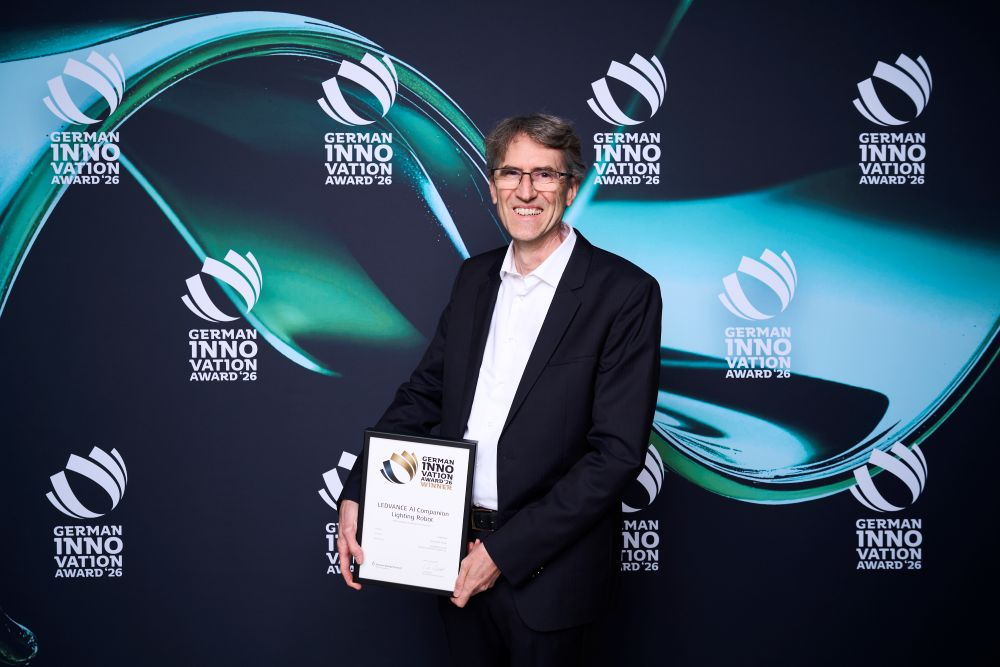
LEDVANCE, one of the world’s leading providers of general lighting, has been named the winner in the Excellence in Business-to-Consumer Lighting category at the German Innovation Awards 2026, held in Berlin in May. Following the successful debut of Elix at Lichtwoche Sauerland and its showcase at the world’s leading lighting trade fair, Light + Building 2026, the award reinforces the company’s reputation for driving innovation in lighting technology.

At the heart of the project is Elix, an intelligent lighting robot that seamlessly combines lighting, robotics and emotional interaction. Developed around the belief that lighting is about far more than illumination, Elix responds in real time to users’ activities, moods and gestures, creating an adaptive, intuitive and lifelike experience.

“Receiving the German Innovation Award validates our approach to rethinking light and pushing the boundaries of what is possible,” said Dr. Ulrich Weiss, Head of Product Management & Innovation & Global IT at LEDVANCE. “The development of Elix reflects our commitment to innovation and the technological direction we are pursuing.” The project demonstrates how artificial intelligence and advanced robotics can work together to create a more natural and engaging interaction between people and technology.

Intelligent task lighting meets emotional intelligence

The AI-enabled Lighting Robot offers two operating modes. In Task Lighting Mode, an integrated AI camera automatically identifies five different application scenarios, including reading, writing and video conferencing. A sophisticated six-axis robotic arm directs light precisely onto the user’s workspace, while both the colour temperature and light intensity automatically adjust to improve visual comfort and help reduce eye strain.

In Emotional Lighting Mode, Elix recognises the user’s facial expressions and gestures, translating them into personalised lighting scenes, colours, movements and acoustic feedback. Using integrated gesture control, the robot follows hand movements in real time and also responds gently to touch via its housing.

The judges’ verdict

In its official statement, the German Innovation Awards jury said Elix addresses the challenge of adapting lighting to individual needs and moods in an exceptionally innovative way. By combining lighting, robotics and emotional interaction, the solution creates an immersive experience that extends far beyond conventional lighting.

The jury highlighted the combination of artificial intelligence, gesture control and dynamic lighting scenes, which together create an intuitive companion that enriches everyday life while setting new benchmarks for human-technology interaction.

This latest achievement builds on LEDVANCE’s strong track record of innovation. The company previously received the German Innovation Award in 2024 for its sustainable EVERLOOP luminaire range in the B2B sector. In September 2025, the AI Companion Lighting Robot Elix was also recognised as the winner in the Desk Lamps, Floor Lamps category at the LIT Lighting Design Awards.

Categories
industry updates

National Safety Month: Why Lighting Remains a Critical Element of Workplace Safety

Dialight, the world leader in industrial LED lighting innovation, is marking the 30th anniversary of National Safety Month by highlighting how high-performing, industrial-grade LED lighting can help reduce risks, support compliance, and improve overall operational efficiency, particularly in harsh industrial worksites and conditions. National Safety Month, established by the National Safety Council, is a nationwide initiative focused on reducing preventable injuries, one of the leading causes of workplace and community fatalities.

In industrial facilities, where employees operate around heavy machinery, hazardous materials, elevated workspaces and around-the-clock production schedules, visibility plays a critical role in reducing the risk of injury or even death. In these intense environments, lighting must do far more than simply illuminate a space. Lighting must perform reliably in challenging conditions, maintaining consistent light levels and supporting workers in making safe and accurate decisions throughout their shift. This year’s campaign continues to focus on practical, action-led safety improvements across workplaces, roads, and communities.

Poorly lit environments are a key contributor to slips, trips, falls and contact with equipment, while inadequate illumination can make it more difficult for workers to identify hazards, navigate safely and perform tasks accurately. High-pressure sodium lights, in comparison to LED, can cause difficulty in distinguishing colors, putting workers at risk of misinterpreting color cues from warning placards, signs, or electrical wiring. Research has shown that clear visibility of workplace hazards can significantly reduce the likelihood of accidents and injuries by as much as 60%. LED lighting delivers appropriate levels of illumination for alertness, color perception, and reducing fatigue.

Alongside the performance of lighting, reliability is equally important. Maintenance activities, such as frequently changing light bulbs, pose safety concerns for workers as many take place at heights with risks of electrocution and falls from elevation. Unlike traditional lighting technologies that often require frequent maintenance or experience lengthy restart times following a power interruption, industrial-grade LED systems are designed for long operating life and instant illumination.

Reliability is particularly important in harsh and hazardous industries where environmental conditions can place significant demands on lighting infrastructure. Exposure to vibration, extreme temperatures, dust, moisture, corrosion and unstable power conditions can all affect lighting performance and, if not properly addressed, create additional operational and safety risks. In addition, HPS lighting emits high levels of unsafe UV radiation. Potent neurotoxin Mercury can be released by accidental breakage during use or disposal, particularly during maintenance. LED lighting fixtures are a safer alternative, containing zero hazardous materials.

Modern industrial LED lighting has transformed the way facilities approach these maintenance challenges. High-performance LED solutions provide bright, uniform illumination that improves visibility across work areas, walkways, stairwells and operational zones. Enhanced color rendering and near-daylight lighting conditions can help workers identify potential hazards more quickly and perform detailed tasks with greater accuracy.

Beyond accident prevention, lighting also contributes to wider operational performance by supporting productivity, improving employee comfort and wellbeing, and helping organizations maintain compliance with industry safety standards and regulations. As businesses continue to modernize their operations, lighting increasingly forms part of broader initiatives focused on operational excellence, workforce welfare and sustainability.

Dialight is proud to contribute to the performance of workplaces by providing industry-leading lighting solutions. Dialight offers a 10-year warranty and long LED fixture lifespan, which helps to significantly reduce the dangerous task of maintaining industrial lighting at elevated heights, while clear illumination helps to identify risks and prevent costly mistakes or accidents.

For Dialight, National Safety Month provides an opportunity to highlight the important role that lighting plays in creating safer, more productive workplaces. Each week in June highlights a different safety priority, including slips, trips and falls, reinforcing the importance of visibility and hazard prevention in industrial environments.

Diener Arellanes, the Head of Operations and Plant Manager – Ensenada, at Dialight said: “As National Safety Month encourages organizations to strengthen their commitment to safety, lighting remains one of the simplest yet most impactful ways to help create workplaces where employees can work safely, confidently and effectively.

We believe that lighting is a critical component of any comprehensive workplace safety strategy, and a key consideration when implementing infrastructure. In harsh and hazardous applications, dependable lighting is an absolute necessity. By investing in the right environment, including reliable, high-quality lighting, organizations can protect their workforce while supporting compliance, improving operational efficiency and contributing to employee wellbeing.”

Categories
industry updates

Lighting a New Home for Oxford University’s Humanities

Delivering lighting across teaching, performance, library and
public spaces, TRILUX supplied 6,691 luminaires for the Stephen A. Schwarzman Centre for
the Humanities at the University of Oxford — one of the University’s most ambitious
building projects. The scheme combined bespoke product development with TRILUX’s
standard portfolio.

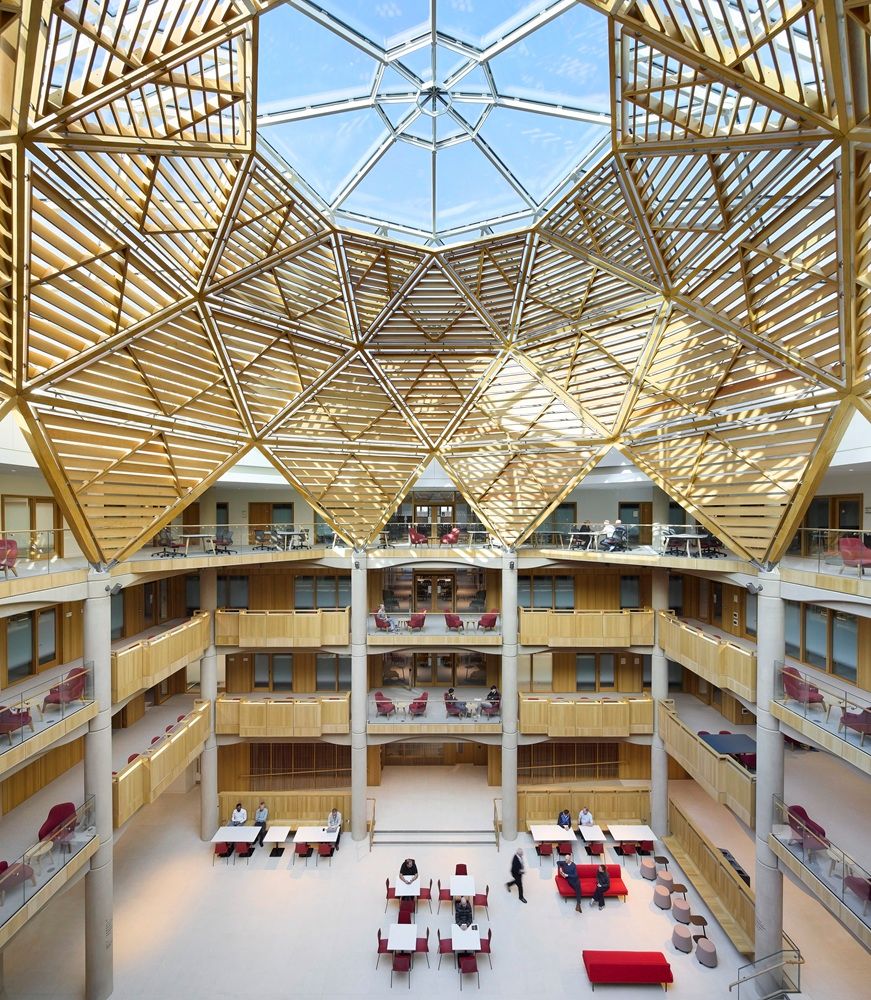
At the heart of Oxford’s Radcliffe Observatory Quarter, the Stephen A. Schwarzman Centre for the
Humanities brings teaching, research, performance and public engagement together within a
single cultural campus. Designed by Hopkins Architects with Max Fordham as M&E engineers and
lighting designers, and delivered by main contractor Laing O’Rourke, the project represents the
largest single building development ever undertaken by the University.

TRILUX played a central role in delivering the lighting for the Schwarzman Centre, supplying 6,691
luminaires across the building, including general, architectural and emergency lighting solutions.
The building combines academic facilities, performance venues, libraries and public spaces across
more than 25,000 square metres and has achieved Passivhaus certification.

A Lighting Strategy for Complex Spaces
The diversity of spaces within the Schwarzman Centre required a flexible lighting approach
capable of supporting both specialist performance environments and everyday academic use. Key
architectural areas such as the main entrance, Great Hall and concert venue required carefully
integrated lighting solutions, while teaching spaces, circulation areas and study environments
demanded efficient, reliable illumination.

Lighting across the site uses wireless lighting control. TRILUX supplied wireless luminaires with
Bluetooth connectivity throughout the building, supporting flexible scene setting, zoning and real-
time lighting adjustment across the campus.

Bespoke Meets Standard

A key element of TRILUX’s contribution to the project was the development of a bespoke luminaire
for the library spaces. The solution was designed to deliver uniform vertical illumination across
library shelving, ensuring consistent light levels from top to bottom while maintaining visual comfort
for users.

Achieving this level of performance from a compact luminaire profile required careful optical
design, allowing the fitting to deliver multiple light angles from a single channel. The bespoke
solution formed part of the proposal that helped secure the project.
Alongside this bespoke development, TRILUX supplied luminaires from its standard portfolio
across the wider building, ensuring consistency of lighting quality while supporting efficient
installation and maintenance.

Amongst others, Finea linear luminaires were installed extensively across teaching spaces, offices,
and circulation areas, while Sonnos downlights were widely used throughout social and shared
environments. In performance and service areas, Oleveon and Aragon luminaires provided robust,
reliable illumination. Office environments were supported by Siella G5 suspended luminaires, with
Onplana downlights used across a range of working spaces.
Together, these solutions formed a coordinated lighting approach across the diverse environments
within the building.

Supporting Passivhaus Performance

Sustainability was a core principle of the Schwarzman Centre design. As a Passivhaus-certified
building, the project required highly efficient building systems and careful coordination across
disciplines.
TRILUX’s lighting solutions support these ambitions through high-efficiency luminaires and
intelligent control, helping to minimise energy consumption while maintaining appropriate lighting
quality across academic, cultural and public spaces.

Collaboration on a Complex Project

Collaboration across the project team played a key role in delivering the lighting strategy. TRILUX
worked closely with Max Fordham, Laing O’Rourke and other partners to ensure the lighting
solutions aligned with architectural intent, construction methodology and long-term operational
requirements.
The project demonstrates TRILUX’s ability to support complex, large-scale developments through
a combination of bespoke design capability, reliable product solutions and flexible lighting control.

A Future-Ready Cultural and Academic Space

The completed Schwarzman Centre provides a flexible environment that supports teaching,
research, performance and public engagement. The lighting strategy plays an important role in
shaping these spaces, creating environments that are comfortable, adaptable and efficient.
As one of the University of Oxford’s most significant building projects, the Schwarzman Centre
highlights how lighting design, product innovation and collaboration can support world-class
academic and cultural environments.